

 Hollister, CA · AI
How do buyers in Hollister, California react to AI in sales?
Buyers in Hollister reject AI that hides human involvement or fakes personal relationships, but they value backend automation that speeds up quotes, order processing, and delivery schedules
Immediate Rejection of Synthetic Personalization
Buyers in Hollister evaluate vendors based on direct accountability. The commercial landscape relies on owner-operators across agriculture and specialty crops, wine production, light manufacturing, construction and trades, local retail and services, and logistics along Highway 25. These business owners do not operate through corporate legal departments, external consultancies, or multi-tiered buying committees. They evaluate every sales proposal directly and make purchasing decisions on tight timelines.
When sales reps use artificial intelligence to draft hyper-personalized outreach that pretends to know the business owner, the tactic backfires immediately. An owner of a wine production facility or a local construction firm recognizes automated phrasing and artificial context instantly. Generating synthetic familiarity, referencing local events or guessing operational challenges using machine algorithms, signals that a vendor is unwilling to invest real effort in learning the account.
Because Hollister is a tight-knit small-business market, commercial reputation travels quickly through direct peer networks. Business owners trade notes at the same handful of local spots across town every week. When a vendor sends low-effort, automated sales pitches to multiple operators in San Benito County, those owners compare notes. A single misstep with automated email blasts damages your credibility across an entire local trade network before you ever secure a second conversation.
Where Local Buyers Accept Automation
Hollister business owners do not oppose software, digital record-keeping, or algorithmic execution. They respect technology that saves operational time, eliminates administrative friction, and accelerates turnaround times. In an owner-operator market, time spent correcting administrative mistakes or waiting on delayed quotes directly impacts daily cash flow and field productivity.
Buyers actively welcome artificial intelligence when it improves backend administrative precision and accelerates response times. Automation earns trust in specific operational areas:
- Accelerating line-item quote generation for construction and trades contractors who need accurate job costs quickly
- Tracking shipping manifests, fleet routes, and schedule updates for logistics along Highway 25
- Processing complex seasonal purchase orders for agriculture and specialty crop growers who operate on rigid harvesting deadlines
- Managing raw material inventory logs and production schedules for light manufacturing operations
- Automating recurring invoice delivery and simple booking confirmations for local retail and services
When AI processes technical data behind the scenes, the buyer receives a faster, more accurate response. An owner evaluating a logistics vendor or a building supplier cares about plain pricing, speed, and accuracy. If machine learning allows a sales representative to deliver an error-free quote within thirty minutes instead of twenty-four hours, the buyer views the technology as an operational advantage.
The Cost of Hidden AI in Account Management
Trust in Hollister relies on physical presence and long-term reliability. Every vendor in this market is judged by whether they show up in person and provide proof they will not disappear when problems arise on a project or order.
If a seller uses AI tools to manage ongoing account communication without informing the buyer, trust collapses the moment the technology makes a mistake. If an agricultural supplier uses an automated AI bot to answer product availability questions, and that system misinterprets a specialty crop input schedule, the farm owner incurs real financial and operational losses.
Because there is no procurement department or corporate committee to absorb vendor mistakes, the owner-operator experiences every operational delay directly. If an owner discovers that a sales representative used an automated program to handle a critical operational question while pretending to write the response personally, the relationship ends immediately.
Buyers in Hollister demand complete clarity. They accept automated tools that streamline routine transactions, but they refuse to be managed by an algorithm disguised as a dedicated local sales representative.
Disclosing AI Usage to Protect Deal Velocity
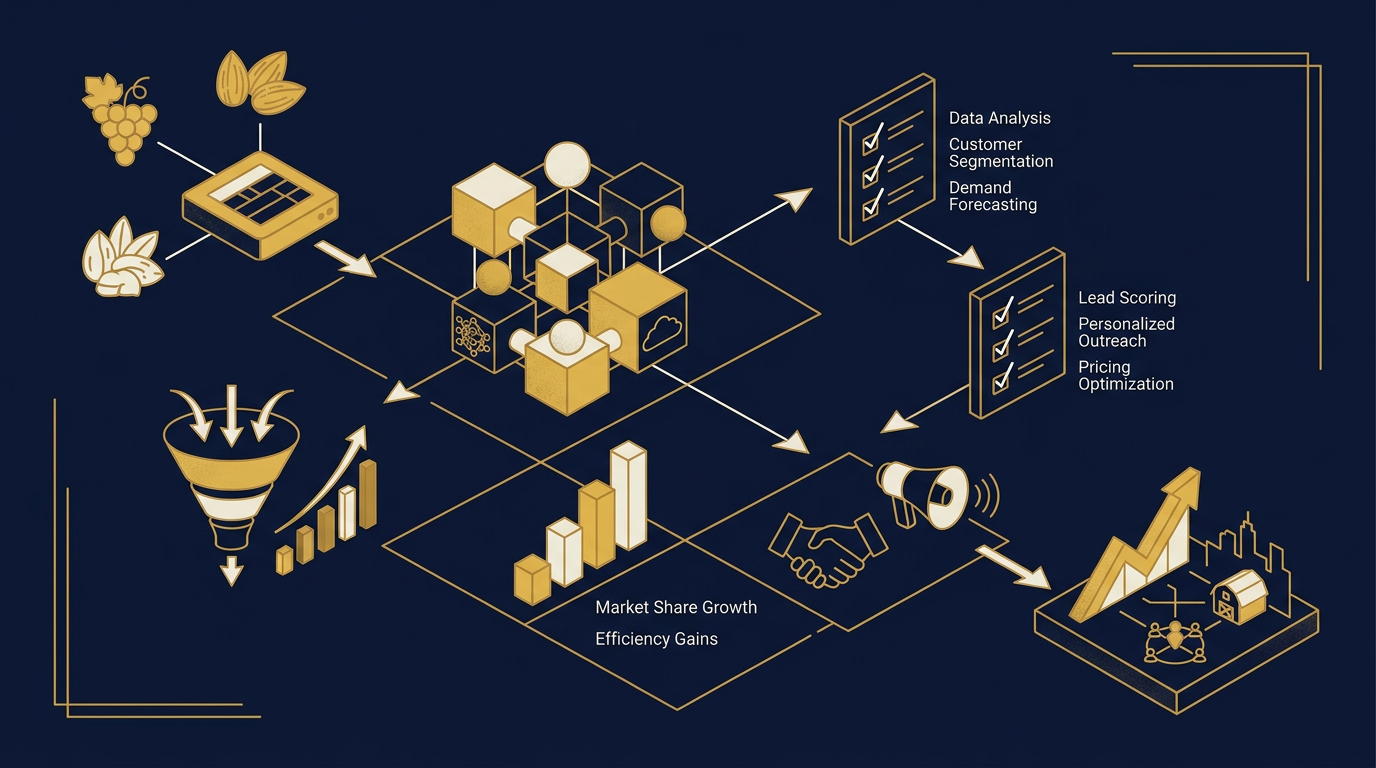
To maintain credibility in Hollister, sellers must frame AI as an operational tool that enhances human availability rather than replacing it. Disclose technology use upfront, concisely, and without corporate hype or jargon.
When presenting a commercial proposal or service agreement to a local business owner, use these exact operational positioning steps:
- State the precise administrative tasks managed by AI tools, such as quote assembly, inventory matching, or route logging
- Reaffirm that all final pricing, strategic decisions, and account commitments are personally verified by a human sales representative before delivery
- Provide direct contact details, including a direct mobile line and physical office information, proving where a real person can be reached immediately
- Explain how using backend automation frees up your calendar to show up in person whenever operational issues require direct on-site oversight
This approach aligns with what Hollister buyers value: transparency, plain pricing, and face-to-face accountability. When an owner understands that software eliminates administrative delay so you can deliver better field support, they view the technology as a benefit to their own operations.
Execution Protocols for Local Sales Teams
Stop using automated AI email sequences for primary prospect outreach in Hollister. Build your initial sales pipeline through direct, face-to-face introductory visits and warm referrals from existing local business contacts.
When you meet with an owner-operator in light manufacturing, wine production, or construction and trades, conduct the primary discovery conversation in person. Use that initial meeting to establish plain pricing structures, verify operational parameters, answer technical questions directly, and shake hands on the scope of work.
After establishing the personal relationship, deploy AI tools exclusively for administrative workflow and back-office speed. Use automated systems to compile complex job specifications, update delivery schedules along Highway 25, or compile monthly invoice summaries. When delivering these AI-assisted materials to the buyer, include a short human verification note: "I used our internal data tools to compile these delivery options quickly so we can confirm your order today. I reviewed all the numbers myself." This simple execution protocol maintains full transparency, leverages technology for execution speed, and enforces direct human accountability on every sale.