

 Los Angeles, CA · AI
How do buyers in Los Angeles, California react to AI in sales?
Los Angeles buyers welcome AI tools that accelerate proposal speed and data synthesis, but reject synthetic personal outreach that attempts to replace human trust and matrixed consensus
Operational Speed Versus Network Trust
In Los Angeles, high operating costs, substantial tax rates, and strict regulatory policies force enterprises to pursue extreme efficiency. Business leaders across dominant regional sectors, including entertainment and media production, aerospace and defense, international trade and logistics, bioscience and healthcare, and technology ventures, operate under continuous competitive pressure. To stay ahead, buyers actively value flexibility, speed, and modern technology integration from their commercial vendors.
When sales organizations deploy artificial intelligence to accelerate complex backend operations, local executives react positively. Using automation to process complex trade data, model pricing scenarios, or generate rapid technical specifications aligns with what buyers want: faster answers without compromised quality. If an account representative uses software to turn around a custom proof of concept in four hours instead of four days, the operational speed earns respect.
However, acceptance of back-office automation does not translate into acceptance of automated sales relationships. Trust in Los Angeles commercial markets relies heavily on strong professional networks, verified regional experience, and cross-functional alignment. When sellers use artificial intelligence to automate relationship-building, such as sending mass-generated, synthetic outreach that fakes personal connection, buyers disengage immediately. Commercial buyers draw a sharp line between technology that enhances operational performance and technology that pretends to replace human credibility.
Where AI Acceleration Is Welcomed
Commercial purchasing in Los Angeles is rarely controlled by a single manager. B2B purchasing frequently involves multi-layered matrixed decision-making, where creative, legal, and operational stakeholders must align before a contract moves forward. AI delivers measurable value when it helps sellers navigate these multi-department review cycles faster.
Local buyers openly accept automation when it serves these specific functions:
- Rapid Technical Customization: Generating customized product documentation, spec sheets, and preliminary scope drafts tailored to complex healthcare, bioscience, or aerospace requirements
- Logistics and Supply Chain Modeling: Processing multi-variable data to deliver precise freight, routing, and inventory timelines for international trade and logistics firms utilizing regional infrastructure
- Asset and Workflow Staging: Producing rapid content mockups, software environment prototypes, and media deployment schedules for technology ventures and digital media teams
- Regulatory and Compliance Formatting: Structuring contract proposals so that legal teams can review privacy, liability, and labor compliance mandates without sorting through unstructured vendor notes
In each of these operational use cases, the software eliminates administrative friction. Buyers do not perceive back-end automation as lazy or deceptive when it delivers clean, structured output to their review committee. The technology succeeds because it respects the buyer's time and simplifies the consensus process across creative, legal, and operational leadership.
Where Synthetic Outreach Costs Commercial Trust
While operational acceleration earns deals, front-end sales automation used for cold prospecting creates immediate friction in Southern California. The local business ecosystem operates on established professional networks and direct industry experience. Buyers filter incoming solicitations through a strict lens of authenticity and regional track record.
Artificial intelligence costs sales teams trust when it attempts to simulate personal relationships or obscure a lack of local context. In entertainment and media production, where creative rights, executive reputations, and tight production windows dictate spending, automated cold outreach feels intrusive and out of touch. When an automated sequence scrapes public profile data to compose a faux-intimate email about a project or executive news item, local buyers recognize the pattern instantly. It marks the vendor as an outsider relying on volume metrics rather than domain expertise.
Synthetic personalization also fails when encountering matrixed corporate buyers. Indiscriminate automated sequences sent to multiple leaders within the same enterprise often land with conflicting messaging. If a vendor's automated tool sends one generic pitch to an operational executive, a different unverified offer to a legal director, and a third to a creative lead, the internal disconnect becomes obvious. Matrixed evaluation teams compare notes. When they discover a vendor using bots to bombard their organization with inconsistent claims, the pursuit ends.
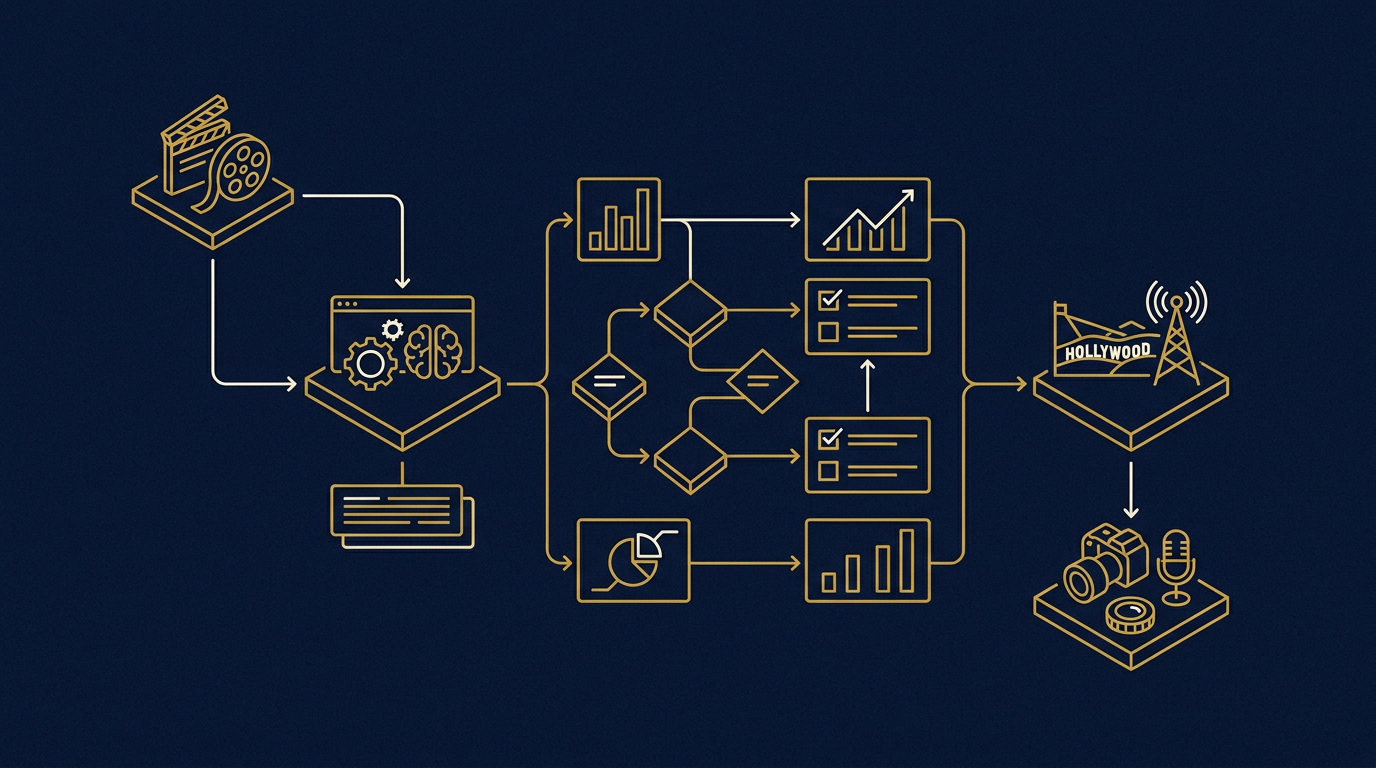
Disclosing Automation Without Derailing the Deal
Given the high cost of doing business and strict regulatory policies across California, attempting to hide artificial intelligence usage from sophisticated enterprise buyers introduces unnecessary risk. Buyers expect modern suppliers to use modern infrastructure, but they demand transparency regarding how their proprietary data, legal exposure, and project timelines are handled.
Sales professionals must frame their use of artificial intelligence around data security, human oversight, and operational speed. Disclose automation by applying three explicit principles during early-stage deal structuring:
First, position the technology as a speed mechanism designed for the buyer's benefit. Explain that automated tools are used to process logistics calculations, draft initial scopes, and format technical requirements quickly so project timelines are met.
Second, guarantee human governance over every AI-generated asset. Explicitly state to committee members that every workflow model, contract draft, or custom spec sheet generated by software is manually reviewed, verified, and approved by senior account specialists with regional industry experience.
Third, directly address data privacy. Confirm that buyer inputs, proprietary assets, trade data, and confidential media files are isolated within secure, private enterprise environments and never fed into public machine learning algorithms.
When sellers address these points upfront, disclosure transitions from a potential liability into proof of operational maturity. Buyers accept that software handled the heavy computational lift because an experienced human account owner remains directly responsible for the outcome.
Actionable Guidelines for Sales Teams in Los Angeles
To maximize deal velocity while preserving commercial trust in Los Angeles, sales organizations must align their automation tools directly with local matrix buying habits.
Begin by removing automated conversational agents, synthetic video avatars, and hyper-personalized mass emails from early-stage outreach. Reserve initial discovery and account mapping for direct human engagement that leverages actual professional networks and clear proof of concept. Use artificial intelligence behind the scenes to gather background context on committee structures, analyze trade patterns, and build tailored pitch decks prior to the first meeting. When presenting to matrixed teams, present a clean breakdown showing how the solution satisfies creative goals, complies with legal requirements, and fits operational budgets. Require senior account managers to personally review every document before it reaches an evaluation committee. Finally, establish a clear protocol for declaring data privacy standards during the contract review stage to satisfy strict local corporate policies.
By keeping automation focused on data speed and keeping human expertise focused on relationship alignment, sales teams maintain the credibility necessary to close deals across Los Angeles.