

 San Jose, CA · AI
How do buyers in San Jose, California react to AI in sales?
Buyers in San Jose accept AI when it speeds up technical response times and proof-of-concept delivery, but reject synthetic personal rapport and automated outreach that bypasses security or integration requirements
Technical Buyers Accept Velocity, Not Synthetic Rapport
Buyers in San Jose evaluate vendor automation through a practical lens. In a market dominated by high technology and software development, semiconductor and hardware manufacturing, cloud computing and IT infrastructure, and biotechnology and medical technology, prospective customers interact with automated systems every day. They are not impressed by generative text outreach or synthetic emails that attempt to fake common personal interests.
Local technical evaluation teams and cross-departmental committees respect automation when it saves operational time during initial inquiry triage. When a prospective client requests API parameters, architectural schematics, or technical specifications, using AI to instantly parse the inquiry and return relevant documentation creates immediate value. What local buyers reject is using AI to fabricate personal connections or broadcast unvetted marketing claims to decision-makers.
High real estate costs and operational overhead force local businesses to run lean teams. Specialized technical talent working within cloud computing or medical technology firms does not have time to read generic automated sales cadences. If an AI tool drafts an outreach message that displays a superficial or inaccurate understanding of their existing software stack, the buyer deletes the message and flags the vendor.
In this market, buyers view artificial intelligence as an operational utility. They want vendors who respect their time. Automated lead routing, instant technical document assembly, and precise response handling demonstrate respect for a buyer's timeline. Automated fluff and synthetic personalization demonstrate the opposite.
Where AI Destroys Trust in Committee Evaluations
Purchasing across San Jose rarely relies on an individual business owner making a rapid decision. Decisions move through multi-layered technical evaluation teams, legal compliance reviewers, and cross-departmental committees. Because local companies operate under California's regulatory and tax framework alongside strict internal security protocols, any sales tactic that appears deceptive halts contract negotiations immediately.
Artificial intelligence creates immediate distrust across local buying committees in three specific scenarios:
- Simulating human presence in live text chats or video interactions during discovery conversations
- Generating unverified technical claims, regulatory compliance statements, or proof-of-concept timelines without engineering validation
- Sending automated follow-up cadences that ignore specific technical objections raised during committee reviews
When selling to semiconductor and hardware manufacturing firms, biotechnology leaders, or global corporate headquarters, security and compliance are paramount. Decision-makers prioritize seamless integration with existing software stacks and robust cybersecurity standards. If an AI tool provides inaccurate information regarding data security standards or integration parameters, the technical evaluation committee will mark the vendor as a compliance liability. Rebuilding executive credibility after failing a technical evaluation or security review is rarely possible.
Furthermore, cross-departmental committees communicate internally. If a sales rep sends conflicting AI-generated responses to different committee members, the evaluation team notices the inconsistency. High investment capital environments require precision. Inconsistent automated outreach communicates that a vendor lacks operational discipline.
How to Disclose AI Use Without Losing Deals
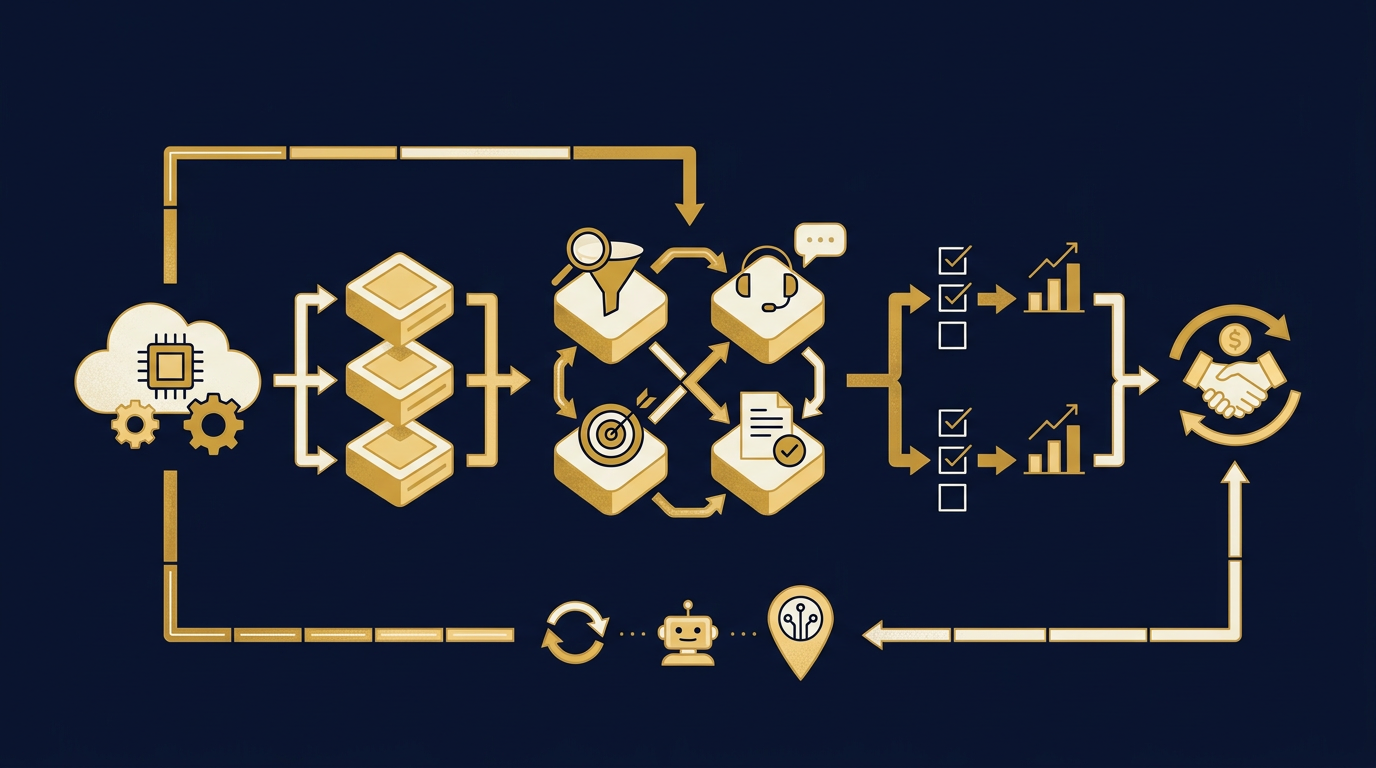
Transparency is mandatory when selling to specialized technical talent and committee-led buying groups. Local buyers do not penalize vendors for leveraging AI to streamline operations. They penalize vendors who attempt to disguise automated output as human expertise.
Disclosing AI usage requires direct, confident positioning. A sales representative should state clearly how automation is used to accelerate service delivery. For example, informing a cross-departmental committee that AI was used to index their technical requirements against existing software architecture demonstrates operational efficiency and respect for their timeline.
Sales teams should follow clear guidelines when disclosing AI tools to local decision-makers:
- State the explicit boundary between automated data retrieval and human technical oversight
- Confirm that all security protocols, system integrations, and preliminary proof-of-concept scopes have been audited by real engineers
- Offer immediate direct access to human technical experts for custom engineering queries or security reviews
By framing AI as an operational speed mechanism, vendors align with local market expectations. Technical teams appreciate fast data delivery as long as qualified human engineers validate every commitment made during the sales cycle.
What This Changes for San Jose Sales Operations
In a commercial landscape defined by substantial investment capital, specialized technical talent, and elevated operating costs, acquiring prospective accounts requires significant capital. The primary operational threat for local sales teams is lost momentum during inquiry evaluation. Slow response times cause buying committees to disengage or move forward with competing vendors who provide information faster. Leveraging AI for rapid information handling ensures faster follow-up so fewer leads are lost to silence.
When technical evaluation committees submit detailed inquiry forms or request proof-of-concept guidelines, waiting extended periods to respond forfeits your strategic advantage. AI tools allow sales representatives to ingest complex technical inputs instantly, identify relevant documentation, and deliver clear preliminary answers within minutes. This rapid response maintains buyer attention while cross-departmental committees organize their internal evaluation criteria.
To execute this model effectively in San Jose, local sales operations should implement three concrete steps:
- Deploy AI tools strictly for administrative velocity, such as categorizing inbound technical requirements, mapping existing software stack parameters, and drafting initial technical document packages
- Mandate qualified human engineer review for every custom proposal, cybersecurity compliance response, and formal proof-of-concept scope before materials reach a buying committee
- Explicitly state in preliminary communications that your team uses automated tools to accelerate initial data processing while senior technical staff maintain complete oversight of solution engineering
By pairing rapid automated follow-up with rigorous human technical validation, local representatives protect account credibility, satisfy committee standards, and sell more effectively across San Jose's demanding commercial market.