

 New York, NY · Systems
Why do sales systems work differently in New York, New York?
Sales systems in New York, New York fail when they rely on linear timelines. High overhead, complex regulatory oversight, and intense event calendars dictate local deal velocity.
Event Disruptions and Seasonal Pipeline Dead Zones
Standard customer relationship management systems assume prospects respond to linear follow-up sequences across a uniform twelve-month calendar. In New York, New York, that assumption breaks pipeline forecasting. Corporate buyers and institutional leaders move through severe work-cadence interruptions caused by local economic and cultural events.
During major municipal and global events, commercial attention shifts entirely. In late summer and early autumn, events like New York Fashion Week divert executive focus across retail, media, and tech expansion sectors. By late autumn, logistics, municipal operations, and executive availability stall surrounding the New York City Marathon and the Macy's Thanksgiving Day Parade. As the fourth quarter ends, the Times Square New Year's Eve Ball Drop caps off a multi-week period where executive decision-making halts across finance and corporate headquarters.
If your sales management platform uses automated email sequences that send standard seven-day bump messages during these windows, your touchpoints are ignored. Worse, your team burns access to decision-makers who are managing peak operational stress. Sales systems built for this market must incorporate seasonal freeze windows. Your pipeline stages must allow reps to pause follow-up cadences without flagging accounts as inactive or lost.
Navigating Multi-Layered Buying Committees
The economic structure of this city relies on major employers and global institutions. Entities like JPMorgan Chase, Goldman Sachs, Northwell Health, Mount Sinai Health System, Columbia University, and the City of New York operate under complex, highly segmented governance structures. A sales system that tracks a deal through a single account contact will generate false status reports.
When selling to commercial banking leaders, healthcare networks, or university systems, purchases rarely happen through an individual budget owner. They happen through multi-department committees. A standard three-stage pipeline does not reflect how these organizations spend capital.
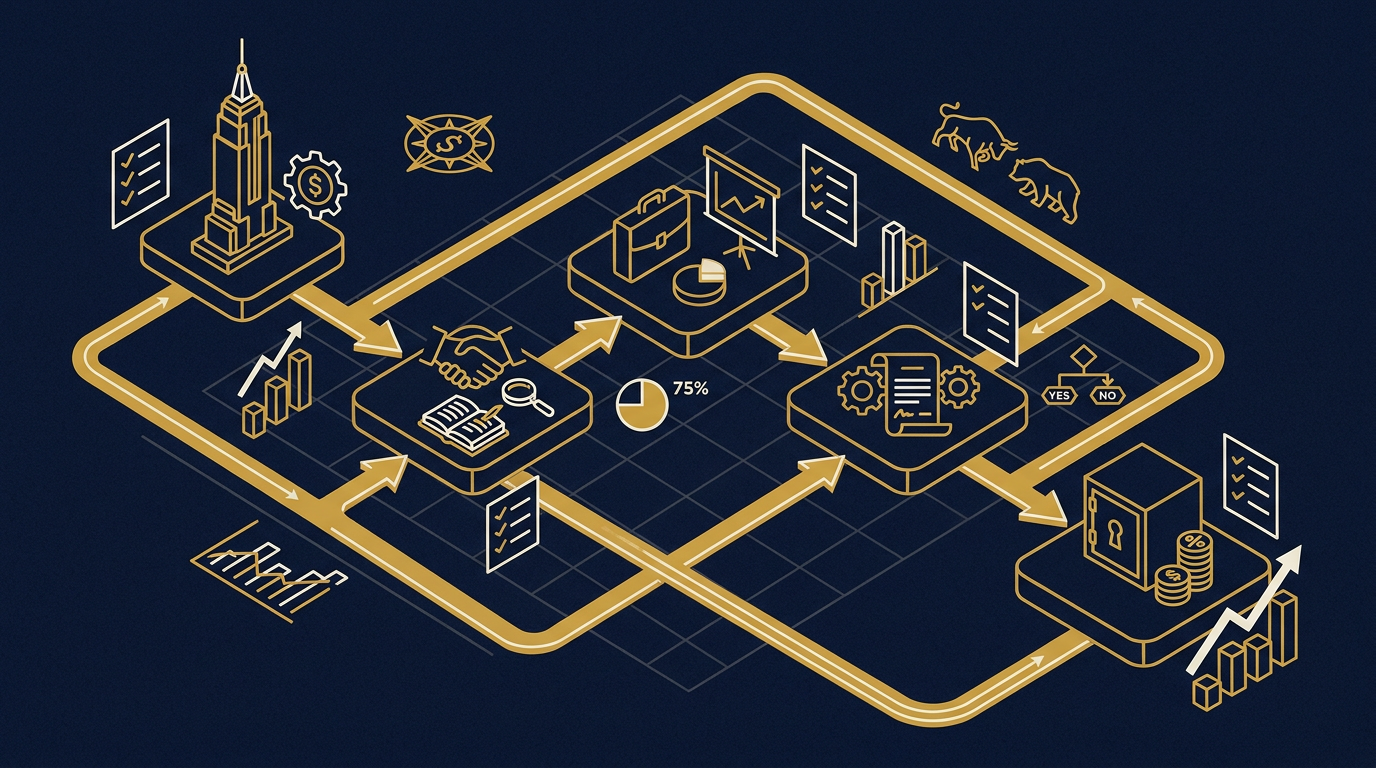
Your system architecture must require parallel tracking across distinct internal stakeholders:
- Procurement and financial compliance officers evaluating overhead impact
- Legal counsel verifying adherence to local regulations
- Operational leads testing product integration against existing workflows
- Executive sponsors holding final budget authority
If your system records progress only when you speak to your main point of contact, your forecast is speculative. A successful cadence in this market requires mandatory system sub-tasks for each stakeholder group. A deal cannot move to the proposal stage until legal and compliance milestones are logged.
Accounting for Regulatory Oversight and Overhead Pressures
Operating in New York, New York involves a high-cost business environment marked by substantial corporate taxes and rigorous regulatory oversight. Because commercial overhead is exceptionally high, decision-makers are hyper-sensitive to risk. They do not buy on optimistic growth pitches. They buy to protect margin, ensure compliance, and lower risk.
Your sales process must embed compliance and risk verification early in the funnel. In sectors like commercial banking, professional services, real estate, and tech expansion, prospects will not advance a conversation if your team cannot demonstrate immediate alignment with regulatory standards.
When reps use standard discovery scripts, they spend time pitching features instead of qualifying compliance readiness. Configure your sales tracking tools to require regulatory pre-qualification before a demo or scoping call occurs. Forcing reps to verify compliance requirements at stage one prevents dead-end deals from clogging your pipeline.
Engineering a Cadence for Elite Talent
This market offers unmatched access to elite talent, international capital, and global corporate headquarters. The sales representatives and account executives operating here are highly compensated and work in an environment where time is severely constrained. A sales system that forces talent to perform manual data entry or navigate bloated pipeline steps will face low internal adoption.
To maintain system integrity, simplify the administrative burden while tightening the operational rules. Eliminate redundant status fields. Replace long text logs with structured drop-down menus tailored to key local sectors, including real estate, professional services, banking, and tech expansion.
Ensure your follow-up cadence reflects local communication habits. Executives in high-overhead corporate environments process massive message volumes daily. Long, multi-paragraph outreach emails fail. Your system templates must enforce brief, direct messaging that highlights operational efficiency, regulatory compliance, or immediate financial returns.
Concrete Actions to Restructure Your Local Sales System
To align your sales operations with local market realities, execute these adjustments in your process documentation and CRM software immediately:
- Audit your active pipeline against institutional buying calendars. Identify all open opportunities within banking, healthcare, real estate, and municipal accounts. Adjust close dates to reflect annual budget approval windows rather than standard quarterly target dates.
- Build explicit seasonal pause rules into your automated sequences. Program your sales software to freeze cold outreach and multi-touch follow-up cadences during the weeks of major local events, including New York Fashion Week, the New York City Marathon, the Macy's Thanksgiving Day Parade, and the Times Square New Year's Eve Ball Drop.
- Restructure your pipeline deal stages to mirror multi-stakeholder purchasing. Require reps to log separate contacts for procurement, legal, and executive sign-off before advancing a deal past fifty percent probability.
- Enforce mandatory risk fields in your discovery stage. Require reps to document the prospect's regulatory oversight framework and specific overhead pressures before issuing a formal proposal.
- Replace generic, text-heavy email templates with direct, short-form messaging templates focused strictly on risk mitigation, capital efficiency, and operational speed
Adjusting your system to these local operational realities turns your sales workflow into a predictable engine for revenue growth.