

 New York, NY · Branding
How do buyers in New York, New York judge a brand?
Buyers in New York, New York evaluate brand credibility through institutional validation, specialized market focus, and immediate clarity of execution capacity before granting a meeting. Generic national messaging signals out-of-town noise.
Commercial buyers in New York evaluate prospective vendors long before a sales representative opens a slide deck. The evaluation happens silently across public digital touchpoints, published executive profiles, regulatory filings, and peer networks. In a market containing major financial hubs around Wall Street and massive public entities like the City of New York, buyers face endless sales solicitations daily. They use aggressive filtering mechanisms to protect executive time.
If your brand messaging relies on generic value propositions, soft benefits, or broad claims of excellence, local decision-makers categorize your company as out-of-town noise. They want to see precise operational capacity, proven governance, and clear vertical positioning. Credibility in this market is not established by creative visual design or bold marketing slogans. It is established by demonstrating that your organization understands enterprise constraints, strict compliance standards, and fast-paced execution.
Institutional Signals and Enterprise Risk Filtering
The dense concentration of institutional giants shapes buyer expectations across every commercial sector in the city. When corporate leaders at firms like JPMorgan Chase or Goldman Sachs review a potential vendor, their primary focus is risk mitigation. The same criteria apply when health system executives at Northwell Health or Mount Sinai Health System evaluate new operations software, or when procurement officers at Columbia University assess service contracts.
These organizations operate under rigorous oversight and complex governance structures. As a result, commercial buyers throughout the city adopt the same vetting standards used by major institutions. Before accepting an introduction, local buyers examine whether your brand demonstrates clean compliance records, transparent governance, and technical maturity. If your brand assets do not immediately surface these factors, buyers assume your organization lacks the capacity to handle enterprise integration. They will not schedule a call to ask basic qualification questions. They expect those answers to be self-evident across your digital infrastructure.
Distinguishing Local Capability from Out-of-Town Noise
Out-of-town noise follows a predictable pattern. National vendors often launch broad regional marketing campaigns featuring generic case studies from unrelated industries. They use buzzwords, claim universal applicability, and display landing pages that look identical across fifty different markets.
Buyers in New York recognize this pattern instantly. They reject vendors that attempt to appear localized by simply adding a photo of the Empire State Building or Central Park to their website header. Decorative local imagery does not create trust. Decision-makers view superficial local targeting as a substitute for real operational capability.
To stand out from national noise, your brand must demonstrate deep sector-specific competence. A buyer reviewing a logistics platform, healthcare vendor, or financial consultancy looks for direct evidence that the vendor understands localized operational density, intense market competition, and regulatory compliance. When your content speaks directly to the friction points of operating within major commercial economic centers, buyers take notice. When your collateral uses generic broad-market template language, your emails are archived without a reply.
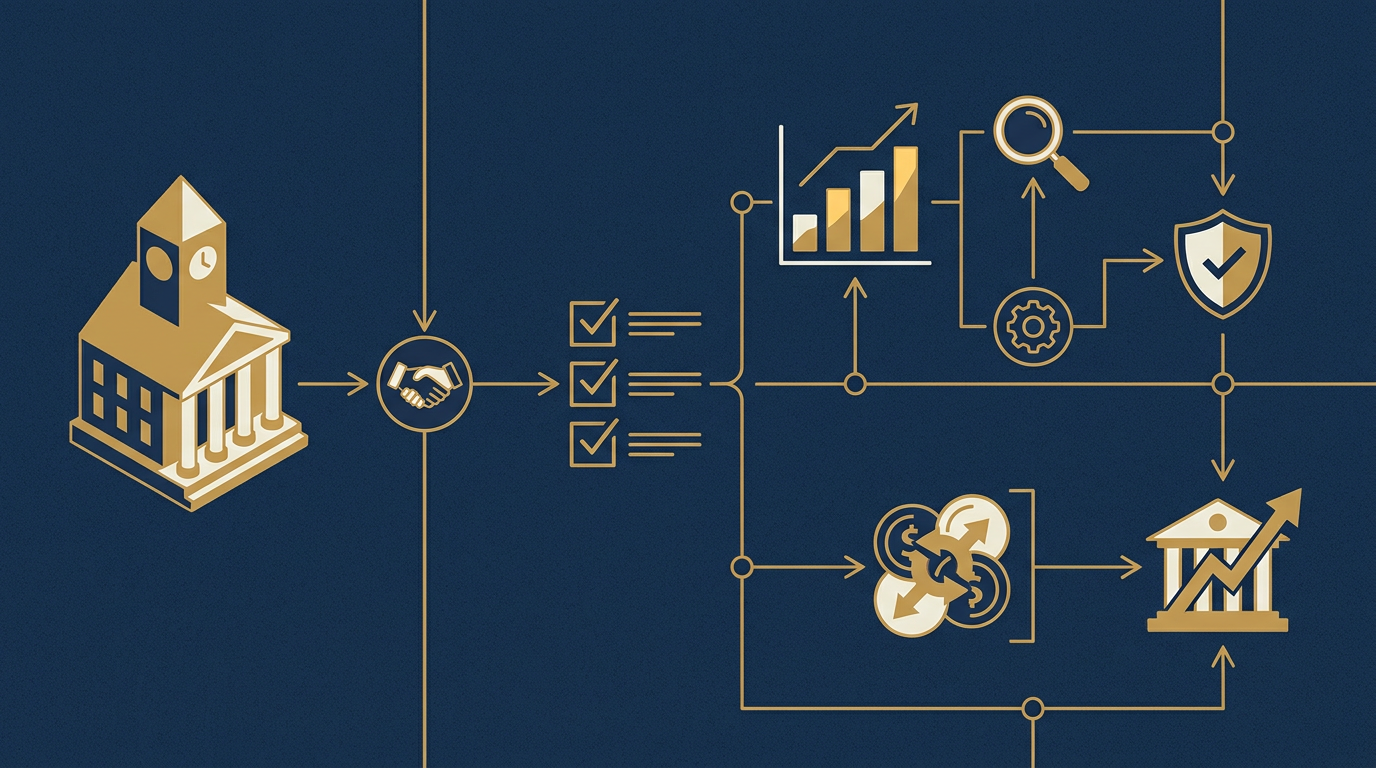
Digital Audit Checklist for Pre-Meeting Vetting
Local buyers conduct thorough background research before agreeing to a discovery call. They inspect leadership profiles, company documentation, and public proof points. Your brand assets must pass an internal review across specific operational areas:
- Governance and Executive Presence: Decision-makers look for clear, professional leadership profiles. They want to verify that executives have direct domain experience in complex corporate, health, or educational environments.
- Regulatory and Security Proof: Financial institutions, healthcare systems, and municipal entities require verified data safety and legal compliance. Publishing clear compliance frameworks builds immediate trust.
- Specific Industry Artifacts: Technical documentation, whitepapers, and structured case studies must address complex operational challenges rather than surface-level claims
- Direct Value Articulation: Core offers must state exact outcomes, integration timelines, and resource requirements without relying on fluff or exaggerated performance claims
If any of these four elements are missing or vague, buyers move on to competing vendors who provide complete operational transparency upfront.
The Evolution of Trade and Operational Rigor
The commercial culture of New York has always been defined by high-stakes commerce and rapid adaptation. Originally established as the Dutch trading post New Amsterdam in the 17th century, the settlement was later seized by the British and renamed New York. It quickly expanded into a primary Atlantic trade port, serving as the economic gateway for millions of immigrants entering through Ellis Island.
Over the 20th century, the city transitioned from industrial shipping and manufacturing to become an international financial, economic, and cultural hub. This legacy of continuous trade evolution created a commercial ecosystem that values efficiency above all else. Local decision-makers inherit this commercial mindset. They respect brevity, speed, and proven capability. They have no patience for slow onboarding cycles or vendors that require extensive hand-holding. When your brand communicates absolute clarity regarding delivery schedules, governance, and operational boundaries, you align directly with the historical trade standards of the market.
Practical Steps to Realign Your Brand Strategy
To build immediate credibility with decision-makers, you must audit your public brand materials and remove non-essential content. Start by conducting a thorough review of your public website, sales decks, and executive social media channels. Eliminate generic marketing phrases, high-level platitudes, and unverified performance claims. Replace them with technical proof, clear governance policies, and explicit deployment frameworks.
Next, update your collateral to highlight how your offerings integrate with complex enterprise environments like those managed by major financial institutions, health networks, and universities across the region. Ensure that your executive team's public profiles reflect clear subject-matter expertise, regulatory familiarity, and industry authority. Publish detailed case studies that outline initial operational friction, specific technical implementation steps, and measurable final outcomes. By presenting a clean, transparent, and institutionally aligned brand profile, you remove pre-meeting skepticism and earn direct access to key decision-makers.