

 New York, NY · AI
Why is AI adoption different in New York, New York?
In New York, AI succeeds as a back-office research engine for complex deals, but fails when exposed to clients who demand strict regulatory compliance and human accountability
Artificial intelligence adoption in New York, New York differs from other commercial centers because local transactions take place under rigorous regulatory oversight, elevated overhead, and intense buyer scrutiny. Commercial sales teams selling across financial services, healthcare, real estate, and digital media face an environment where mistakes are costly and client trust is hard to rebuild. In this market, artificial intelligence fails when companies attempt to automate direct client communications, customer outreach, or frontline pitch execution. AI succeeds when revenue organizations deploy it internally as a back-office intelligence engine to accelerate deal preparation, evaluate institutional structures, and support highly skilled account executives.
Regulatory Risk and Institutional Compliance
In financial services and investment banking, legal frameworks and compliance standards define every commercial interaction. Major institutions like JPMorgan Chase and Goldman Sachs operate under continuous oversight. Similarly, healthcare and life sciences networks, such as Mount Sinai Health System and Northwell Health, maintain strict governance over data handling, patient records, and procurement communications. In professional services and real estate, transactions involve high-value asset transfers, complex lease terms, and multi-entity partnership structures that demand complete accuracy.
When sales organizations deploy unvetted generative AI to draft outbound emails, generate proposal terms, or manage client inquiries, they expose themselves to legal and compliance liabilities. An AI tool that misquotes regulatory standards, generates inaccurate contract terms, or exposes private operational data will destroy an account immediately. Institutional buyers in New York process vendors through multi-layered legal, risk, and compliance committees. When a vendor uses low-quality automated outreach, committee members view it as a failure of operational control. In New York, direct client-facing automation signals risk rather than efficiency.
Maximizing Headcount Efficiency in a High-Cost Environment
New York presents a high-cost business environment characterized by substantial corporate taxes and heavy operational overhead. To maintain margin, local businesses must drive maximum revenue per employee. At the same time, the city offers unmatched access to international capital, global corporate headquarters, and elite talent. High overhead combined with access to top-tier talent means companies cannot afford to waste sales representatives on low-value manual work.
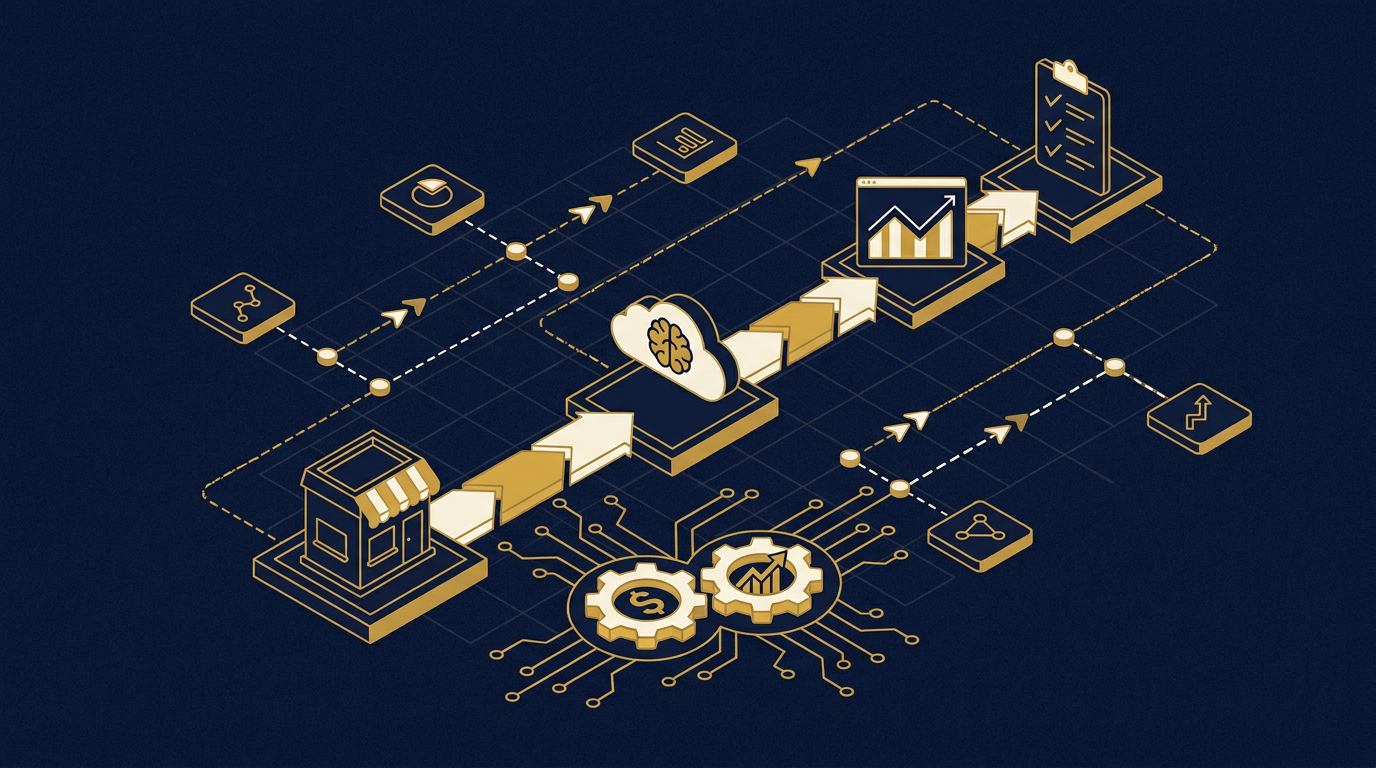
AI creates measurable value in New York when applied as an internal research and preparation engine. Account executives in professional services, real estate, and technology use AI to process dense public disclosures, map complex corporate structures, and summarize lengthy procurement documents before initiating prospect meetings.
Internal AI use cases that successfully drive revenue in New York include:
- Analyzing complex vendor requirements for public and institutional entities like the City of New York or Columbia University
- Parsing earnings transcripts and financial statements from global corporate headquarters to uncover active executive priorities
- Synthesizing multi-year account histories to prepare senior executives for complex, multi-party contract renegotiations
- Extracting key terms from legal filings, real estate disclosures, and commercial leases to accelerate deal assembly
Offloading research and document parsing to internal AI tools allows local account executives to spend their high-cost working hours in strategic, face-to-face dialogue with enterprise decision-makers.
Creative Vertical Resistance to Automated Outreach
The local economy relies heavily on media, publishing, advertising, fashion, and apparel. Organizations in these sectors thrive on brand differentiation, visual identity, and original market perspective. Buyers in these verticals possess a refined ability to detect mass-generated content and automated messaging.
When commercial sales teams use generative AI to blast high-volume cold emails or generic proposals to advertising executives and media buyers, the strategy damages their position. Decision-makers in fashion, advertising, and publishing reject low-effort, automated outreach immediately. In a market built on access to elite creative talent and international capital, mass generic messaging lowers a vendor's perceived value.
Sales organizations scaling revenue in New York's creative and media sectors do not use AI to generate client messaging at scale. Instead, they use AI internally to analyze market trends, gather background intelligence on prospective brands, and identify organizational shifts. Every outbound communication remains tailored, reviewed, and delivered by an account executive.
How to Implement a Compliant AI Sales Workflow
To capture the speed of machine intelligence without compromising client trust, sales leaders in New York must separate internal data processing from client communication.
First, audit your sales touchpoints to isolate external risk. Mandate that all client-facing materials, including sales emails, meeting agendas, technical proposals, and pricing structures, are authored or verified by human executives. Remove automated chat agents and unvetted AI email generators from prospective customer interactions.
Second, direct your AI tools toward target research and account preparation. Before pitching enterprise institutions such as Columbia University, Northwell Health, or major commercial real estate firms, require account managers to run structural analyses of the prospect. Use AI to summarize public strategy announcements, identify potential operational bottlenecks, and highlight relevant compliance requirements.
Third, establish strict operational boundaries for your revenue team:
- Rule 1: No unreviewed AI copy may touch a client or prospective buyer
- Rule 2: Use AI exclusively for data ingestion, transcript summary, and pre-call research
- Rule 3: Maintain strict firewalls between client data and public AI tools to preserve confidentiality
- Rule 4: Require human executive approval on all pricing schedules, compliance attestations, and legal proposals
By enforcing human oversight on external messaging and leveraging AI for internal preparation, commercial teams in New York accelerate pipeline velocity while upholding the high standards of compliance and trust that the market demands.