

 Fresno, CA · Systems
Why do sales systems work differently in Fresno, California?
Standard linear CRM workflows fail in Fresno, California because local buying decisions follow harvest schedules, water policy, and agricultural commodity prices rather than standard fiscal quarters
The Failure of Standard Quarterly Pipeline Models
Standard sales software assumes every business runs on a uniform four-quarter calendar. In Fresno, California, that assumption degrades pipeline accuracy. Purchasing velocity in this market aligns with harvest cycles, water policy announcements, and commodity prices rather than standard corporate quarters. If your CRM forces reps to push deals toward close at the end of March, June, or September, your pipeline metrics will fail.
Commercial operations evaluate capital expenditure through agricultural performance metrics. A grower or equipment buyer holds cash when water policy decisions remain uncertain. They freeze hardware, software, and operational upgrades when commodity prices fall. Conversely, contract commitments surge after a successful harvest cycle concludes.
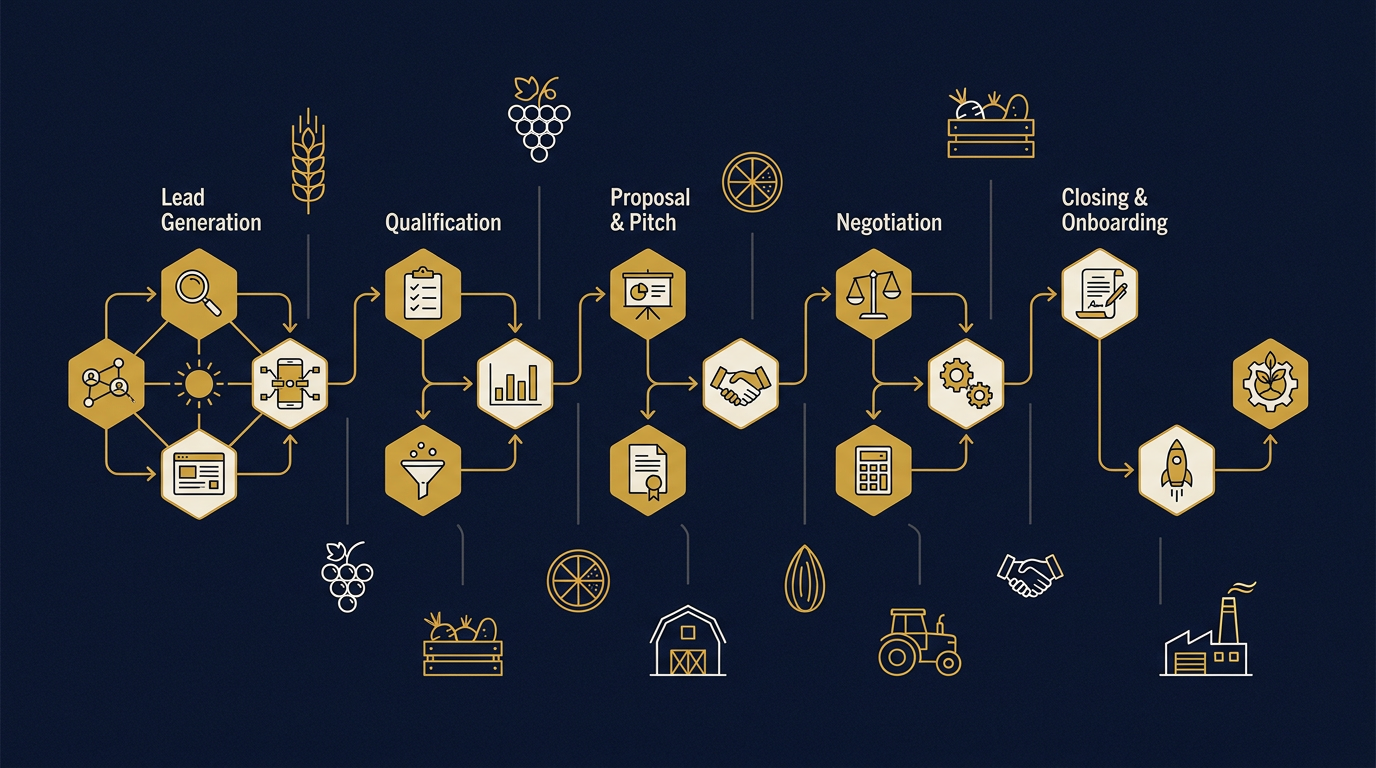
A sales pipeline built for Fresno must track these underlying drivers. A stage marked as stuck in negotiation is often just resting between seasonal revenue events. Standard CRM automation that triggers aggressive closing sequences during a harvest window burns relationships. Your system needs custom pipeline stages that account for agricultural liquidity, policy updates, and seasonal operational availability.
Managing Multi-Layered Institutional Buying Committees
Private commercial operations represent only one half of the local economy. Large public and healthcare institutions dominate employment and contracting in Fresno. Organizations like Community Medical Centers, Saint Agnes Medical Center, Fresno Unified School District, California State University, Fresno, and the County of Fresno execute multi-million dollar procurement plans. However, they do not buy on linear seller timelines.
These institutions operate under strict governance, public budget allocations, and multi-layered buying committees. A rep contacting a single director at Fresno Unified School District or Saint Agnes Medical Center will rarely close a deal without broader consensus. Your CRM must map complex organizational hierarchies rather than individual lead records.
If your sales workflow assigns standard 14-day automated follow-up tasks for these accounts, your messaging will fail. Public sector targets like the County of Fresno or California State University, Fresno require low-frequency, high-value touches linked to budget adoption schedules. Your sales process must mandate tracking board calendar dates, public RFP cycles, and health system committee review windows inside every opportunity record.
Aligning Follow-Up Cadence with Seasonal Events
Executive availability in Fresno shifts around predictable local milestones. Automated sequences that run without accounting for these events see low engagement.
- Blossom Trail season: Signals the start of intensive field preparation across the region. Agricultural decision-makers shift focus to active field operations, drastically reducing office availability.
- Fresno Grizzlies baseball season: Provides structured opportunities for middle-of-funnel entertainment and executive contact
- ArtHop: Serves as a central monthly gathering point for civic leaders, local business owners, and regional professionals
- Big Fresno Fair: Represents a major regional gathering late in the year when commercial schedules pause for networking and community engagement
Your sales automation engine must use these local realities as system rules. Pausing outbound cold call cadences during peak operational periods prevents rep burnout and contact fatigue. Tagging local accounts in your database allows reps to coordinate touchpoints around events like ArtHop or adjust meeting schedules during the Blossom Trail season.
Structuring Field Operations for Production Facilities
Industrial production and agricultural supply chains require efficient physical routing. Major regional employers like Foster Farms run continuous processing operations that demand precise operational coordination. Selling equipment, software, or professional services to enterprise facilities requires aligning rep schedules with plant shift changes and regional travel realities.
Territory management in the San Joaquin Valley requires grouping target accounts geographically. Driving between central office hubs and outlying processing plants consumes hours if reps plan routes poorly. A functional CRM setup for Fresno must enforce geographic clustering.
Field reps should group visits to food production assets like Foster Farms alongside adjacent industrial accounts. Your system must require reps to log plant shift patterns, access constraints, and on-site buyer schedules. This prevents reps from arriving during operational downtime or shift transitions.
Tactical CRM Configuration Guide
To align your sales process with the realities of the Fresno market, implement these specific workflow updates in your CRM immediately:
First, create custom lead and account properties for market drivers. Include mandatory drop-down fields for target account category, water policy dependency, and primary buying calendar type.
Second, adjust automated task workflows based on target sector. Set up distinct task cadences for healthcare systems like Community Medical Centers and Saint Agnes Medical Center that span 60-day to 90-day review cycles. Build automated reminders that track fiscal year start dates for public entities like Fresno Unified School District, California State University, Fresno, and the County of Fresno.
Third, update geography tags to enforce field efficiency. Require sales representatives to log geographic zones before scheduling in-person visits across San Joaquin Valley corridors. Program your system to suggest adjacent accounts when a rep books an on-site meeting at a major facility like Foster Farms.
Fourth, integrate local operational pauses into your marketing automation platform. Program system-wide campaign suppressions during key harvest windows and major event cycles like the Big Fresno Fair. Train your sales team to convert automated touches into personal outreach ahead of the Blossom Trail season.