

 Spokane, WA · AI
Why is AI adoption different in Spokane, Washington?
AI adoption in Spokane differs because local buyers value personal trust and operational compliance over automated sales pitches. Generative tools work best when deployed internally for back-office deal preparation.
The Industrial Realities Shaping AI Adoption in Spokane
Artificial intelligence adoption in Spokane, Washington is dictated by the risk tolerances of its core industries and the high value local buyers place on direct accountability. In markets anchored primarily by early-stage tech, buyers tolerate generic automation, synthetic emails, and rapid iteration. Spokane operates under a different set of economic rules. As the primary economic, commercial, and medical service hub for the Inland Northwest region, the local economy relies heavily on healthcare and life sciences, higher education, logistics and distribution, aerospace manufacturing, and financial and professional services.
Buyers across these key sectors manage strict operational standards, complex regulatory frameworks, and multi-layered buying committees. Top regional employers like Providence Health & Services, MultiCare Health System, Gonzaga University, Spokane Public Schools, and Fairchild Air Force Base rely on formal procurement processes. Decisions involve legal reviews, risk assessments, and multi-department consensus. In this environment, an automated sales sequence or generic AI outreach pitch fails instantly. It signals that a vendor does not understand the buyer's operational complexity or care enough to research their specific requirements.
Furthermore, Washington state's business tax structure influences local capital allocation. Washington state has no personal or corporate income tax, relying instead on a Business and Occupation gross receipts tax. Because the B&O tax applies to gross revenues rather than net profits, local operating margins require precise management. Businesses in Spokane leverage a lower cost of doing business and living compared to Puget Sound cities in western Washington to maintain agile operations. They do not invest in expensive software tools simply to look modern. They adopt technology only when it reduces direct operating expenses or directly increases rep productivity without introducing brand risk.
Where AI Destroys Revenue and Trust in Spokane
Deploying generative AI to manage direct customer communications in the Inland Northwest quietly destroys prospective deals and burns through local account bases. The Spokane business community relies heavily on regional reputation. High-value transactions happen through multi-step relationships where trust is built over time.
When sales teams attempt to automate buyer-facing touchpoints, using generative AI to write cold email blasts, draft custom LinkedIn messages, or staff real-time website chat widgets, the result is almost always negative. Local buyers in logistics and distribution, healthcare, and financial services recognize automated syntax quickly. When an AI tool drafts an email filled with generic praise or unverified assertions about a prospect's operational bottlenecks, local executives view it as low-effort spam.
The risks are even higher in complex sectors like aerospace manufacturing or regional medical distribution. Procurement heads at organizations such as MultiCare Health System or large logistics operators require accurate, detailed answers regarding regulatory compliance, delivery timelines, and unit costs. If an automated sales assistant or unvetted AI template provides vague or inaccurate details regarding contract terms, the buyer will end the conversation permanently.
Unlike massive metropolitan centers where a sales team can burn thousands of leads without immediate consequence, Spokane functions as a close-knit economic center. Missteps in front-line communication spread across industry networks. Losing a contract with one major healthcare network or professional services firm because of careless AI automation can harm a sales team's standing across the entire Inland Northwest.
Back-Office Intelligence: Where AI Delivers Real Utility
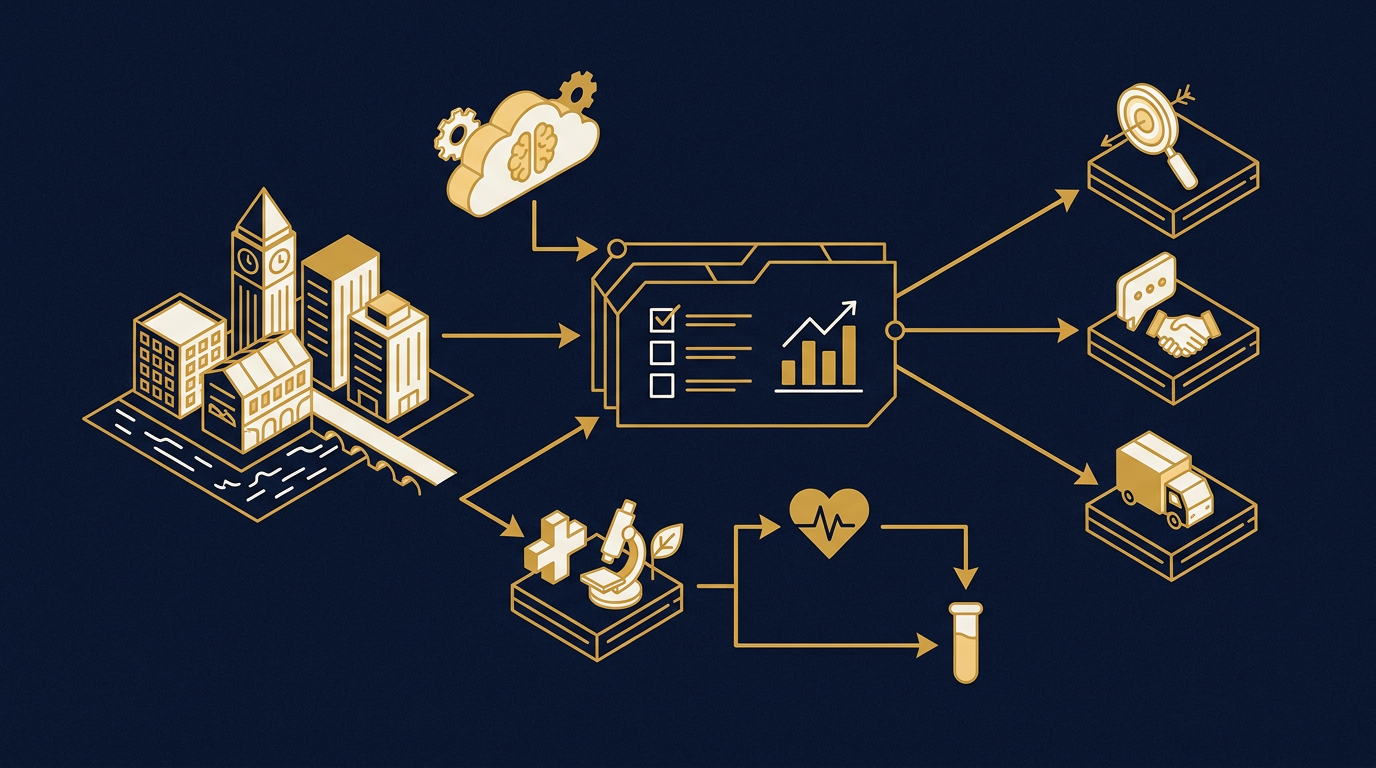
While client-facing AI creates significant brand risk in Spokane, deploying artificial intelligence as a back-office research and analytical tool generates immediate operational value. High-performing revenue teams in the region use AI internally to streamline administrative work, synthesize heavy procurement documentation, and prepare reps for high-stakes meetings.
In industries such as logistics, aerospace manufacturing, and healthcare, sales opportunities usually require navigating massive RFPs and complex bid specifications. Sales reps often spend dozens of hours reviewing legal disclosures, facility requirements, and delivery schedules before even starting a proposal. Using natural language processing models to read and summarize hundreds of pages of procurement documentation dramatically accelerates this phase. Reps can prompt internal AI tools to extract key submission dates, compliance mandates, penalty clauses, and required volume commitments from complex RFP packages issued by public or institutional entities like Spokane Public Schools or local university networks.
AI also excels at internal account research and meeting preparation. In financial and professional services, reps must stay updated on client histories, multi-year transaction logs, and industry developments across eastern Washington. AI tools can ingest historical CRM notes, email chains, and accounting records, factoring in local tax structures like the B&O gross receipts tax, to generate concise account briefs in seconds.
By keeping AI completely internal, local revenue organizations protect client trust. The buyer receives polished, highly customized proposals and engages with fully prepared sales reps who understand their operational reality. The technology works behind the scenes as a quiet force multiplier rather than a public distraction.
Reclaiming Selling Hours: The Practical Operating Plan for Spokane Teams
To build a sustainable advantage in Spokane, local operators must realign how their teams use software tools. The goal of AI in this market is not to replace human sellers, but to strip away administrative friction so reps spend more time in front of local decision-makers. Shifting AI from frontline communication to back-office intelligence yields a clear, measurable result: more selling hours reclaimed per rep each week.
Here is the four-step operating plan for commercial sales leaders in Spokane:
- Audit administrative friction across your sales workflow. Identify every hour reps spend manually copying CRM data, reading multi-page RFP requirements, or drafting basic account summaries.
- Establish a strict frontline boundary. Prohibit the use of unedited AI text in cold emails, formal proposals, LinkedIn outreach, and client contract negotiations.
- Deploy AI tools exclusively for internal analytical tasks. Train reps to use internal models for summarizing long regulatory files, analyzing logistics data, and drafting pre-call research briefs.
- Implement a human verification step. Mandate that sales reps verify all AI-generated internal data points against official documentation before presenting terms to prospective clients at major employers or regional institutions.
When you remove manual administrative tasks, your sales reps regain valuable hours every week. They use those hours to meet face-to-face with decision-makers, tour facilities, attend regional trade meetings, and manage complex stakeholder committees. In a market like Spokane, where companies leverage a lower cost of doing business than western Washington to gain regional market share, reclaiming direct seller capacity is how revenue teams win.