

 Seattle, WA · Branding
How do buyers in Seattle, Washington judge a brand?
Seattle, Washington buyers judge brand credibility through technical rigor and process transparency long before accepting a meeting. Slick pitches read as out-of-town noise.
Seattle buyers evaluate commercial brands through a filter of technical proof, operational architecture, and process stability. A modern website with vibrant photography and lofty mission statements will not earn a first conversation with decision-makers in this market. Corporate buyers, procurement managers, and enterprise evaluation teams inspect vendor credibility long before responding to cold outreach or scheduling an initial discovery call.
To win business in this region, your brand must communicate concrete capabilities upfront. Decision-makers look for documented systems, explicit compliance standards, and clear operational frameworks. Vendors that rely on broad sales pitches and generic marketing collateral are screened out early.
Technical Depth Over Polished Pitch Decks
The economic history of Seattle shaped a pragmatic, engineering-focused approach to commercial purchasing. The city developed as a regional logging center and a primary maritime gateway during the Klondike Gold Rush. In the 20th century, the expansion of The Boeing Company established the region as a major global center for commercial aviation, embedding strict manufacturing, safety, and supply chain protocols into the local business ecosystem. The subsequent rise of software, e-commerce, and coffee culture, anchored by major employers like Microsoft, Amazon, University of Washington, and Starbucks, further reinforced a corporate culture that values infrastructure, scalable systems, and technical depth over promotional style.
Because of this industrial evolution, buyers across the region approach vendor evaluation like an engineering audit. When reviewing a new vendor, local buyers search for concrete proof of execution. They look for detailed product specifications, data security documentation, service level agreements, and workflow diagrams. If your public brand identity consists only of high-level benefit statements, buyers assume your solution lacks technical substance.
Establishing this structural credibility early changes the dynamics of the sales conversation. When a brand clearly demonstrates enterprise readiness upfront, prospective clients spend less time questioning baseline capabilities. This reduces price resistance during contract negotiations and allows vendors to command larger average tickets because the perceived risk of operational failure is minimized.
Signals That Read as Out-of-Town Noise
Seattle buyers quickly identify and reject sales pitches that feel templated or artificial. National vendors frequently attempt to project local familiarity by dropping superficial references to landmarks like Pioneer Square, the Space Needle, or Pike Place Market into their outreach. Local commercial leaders recognize this tactic immediately as out-of-town noise. It demonstrates a lack of real market engagement.
Beyond superficial local references, several specific branding errors alienate buyers in this region:
- High-energy sales claims that lack supporting operational data or architectural details
- Broad positioning statements that claim to serve every market segment without deep specialization
- Generic corporate messaging that ignores supply chain integration, regulatory standards, or technical governance
- Promotional collateral that emphasizes aggressive growth metrics over reliability, quality control, and platform stability
Decision-makers at institutions like the University of Washington or enterprise leaders at Microsoft and Amazon work within structured buying environments. A brand identity that relies on pushy sales tactics or surface-level marketing materials signals an inability to navigate complex corporate evaluations.
Signals That Prove Local Commercial Readiness
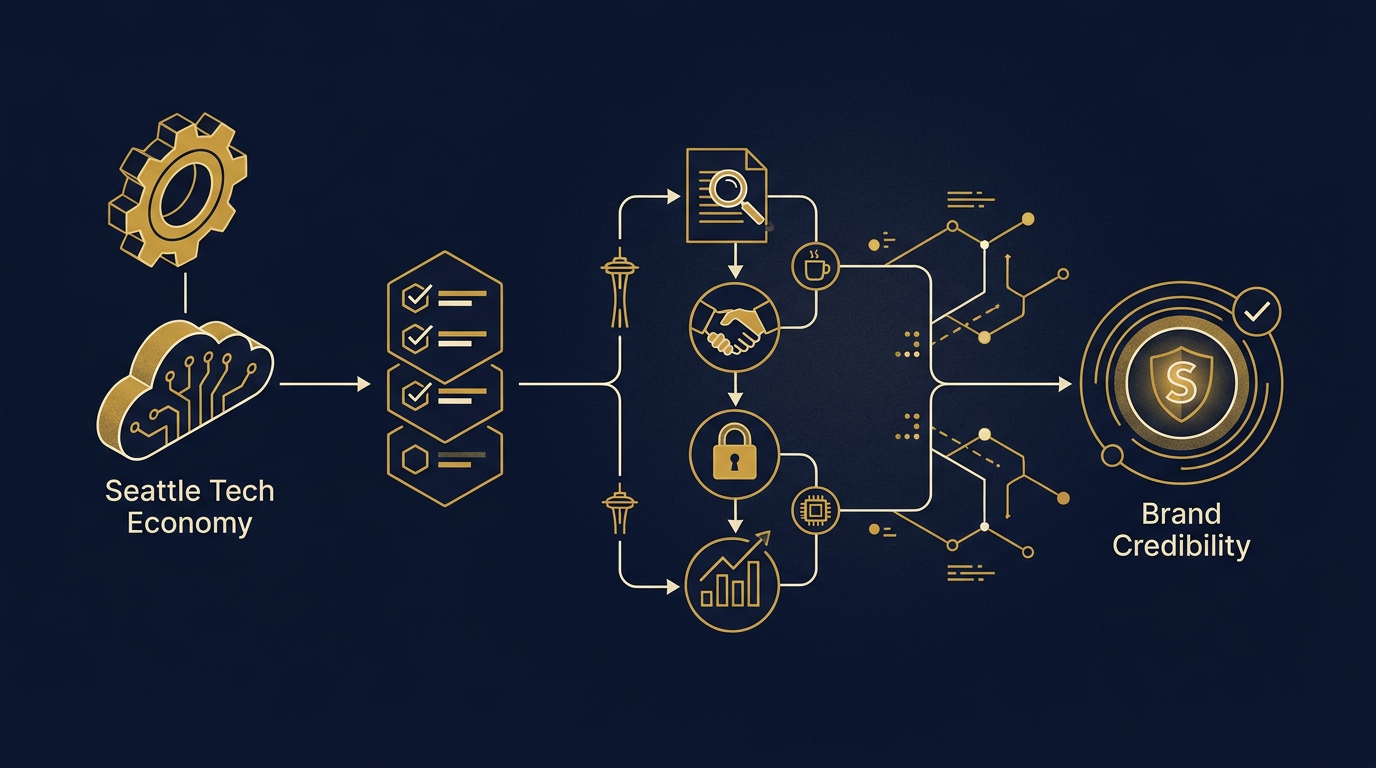
To establish credibility before the first sales interaction, your brand assets must reflect operational maturity and technical clarity. Seattle decision-makers favor vendors that make critical business information easy to audit. Your public identity should prioritize functional transparency over creative flair.
Credibility in this market is built through explicit evidence of operational capability:
- Detailed Technical Documentation: Provide downloadable architecture maps, integration guidelines, and security frameworks directly on your digital channels
- Clear Delivery Frameworks: Explain precisely how your service or product is deployed, managed, and supported over time
- Transparent Operational Standards: Highlight your quality control processes, supply chain management strategies, and regulatory compliance records
- Value-Focused Case Studies: Present customer proof points focused on system uptime, error reduction, process optimization, and measurable yield improvements
When your brand proactively provides this level of detail, you eliminate friction for internal project champions. Buyers can easily share your material with cross-functional review teams, legal counsel, and finance departments. This structural trust accelerates the sales cycle and justifies enterprise-level pricing.
What This Changes for Seattle Operators
For commercial operators targeting Seattle, shifting your brand strategy from high-level promotion to technical transparency creates direct financial leverage. Establishing structural credibility before the first meeting removes preliminary sales friction. It protects your profit margins, shortens enterprise evaluation cycles, and enables your team to command higher baseline contract values.
To capture these gains and position your organization effectively, execute these operational steps:
First, audit all customer-facing materials to remove vague marketing language, standard corporate filler, and superficial references to local tourist sites like Chihuly Garden and Glass or the Museum of Pop Culture. Replace broad marketing language with precise technical descriptions, clear service level parameters, and explicit delivery workflows.
Second, publish detailed integration documentation and compliance frameworks publicly. Allow prospective enterprise clients to review your technical standards without forcing them to submit a lead form first. Giving buying committees immediate access to your functional specifications builds immediate credibility before the first discovery call.
Third, structure your product and service packaging around enterprise scalability and operational risk reduction. Align your tiers with the complex procurement requirements of large regional employers. This approach positions your firm as an enterprise partner, allowing your sales team to sell more comprehensive, higher-margin solutions.