

 Las Vegas, NV · Branding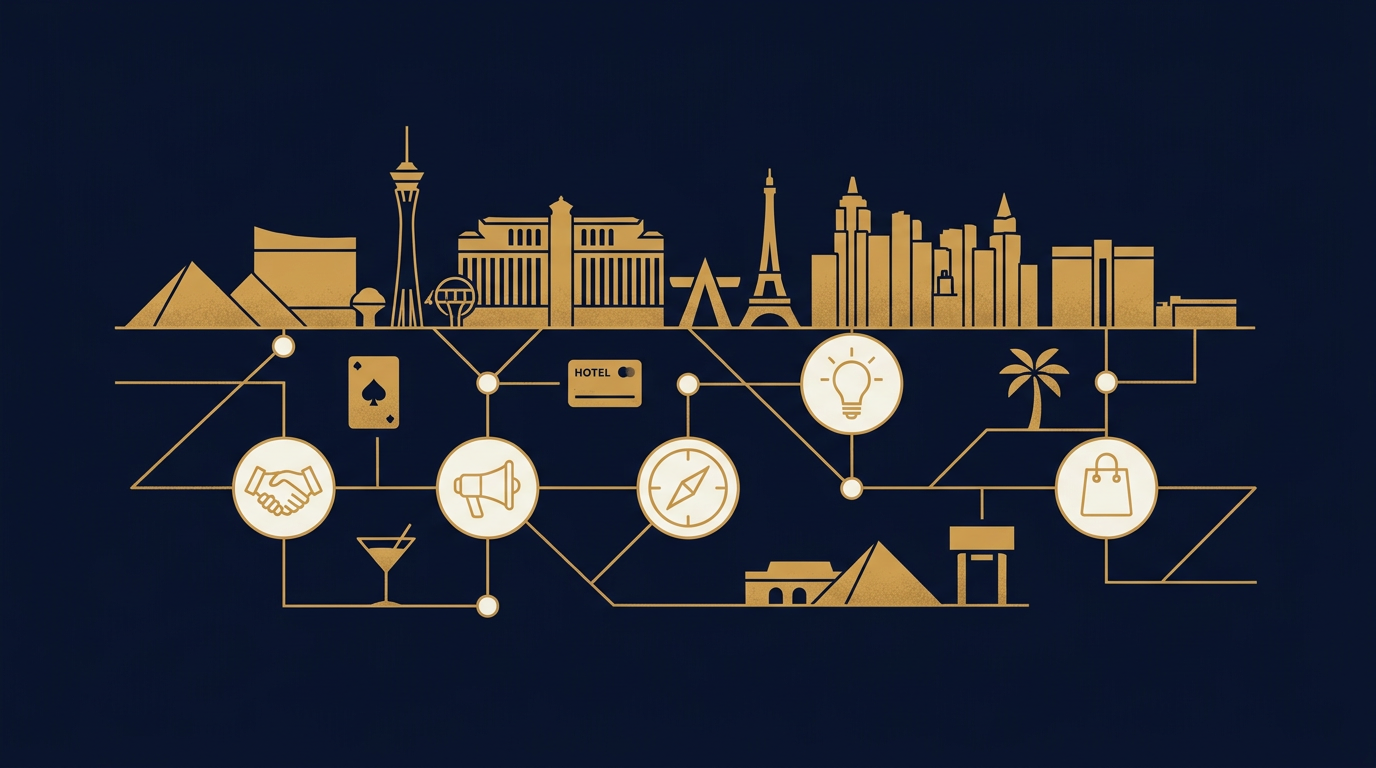
Why is branding different in Las Vegas, Nevada?
Branding in Las Vegas requires an emphasis on high production value, demonstrated scale, and operational permanence before buyers ever grant an initial sales meeting
Visual Polish as a Baseline Trust Signal
Branding in Las Vegas operates under a unique set of commercial expectations. In many regional markets, an unpolished logo or a basic website is forgiven if the vendor has a good personal reputation. In Las Vegas, low visual production value actively damages your credibility before you ever get a meeting.
This commercial reality stems directly from the local environment. Las Vegas decision-makers operate in an economy built on high-stakes presentation, fine dining, live performing arts residency shows, and major resort infrastructure. The local landscape features iconic visual standards represented by the Las Vegas Strip, the Bellagio Fountains, and the Fremont Street Experience. When buyers evaluate prospective business-to-business vendors, they unconsciously compare your digital and physical assets against the high standards of a premier international entertainment and convention center.
If your brand presentation looks amateur, outdated, or incomplete, buyers assume your internal operations suffer from the same lack of discipline. A sleek, highly structured visual identity is not decorative fluff in this market. It is the cost of entry for serious commercial consideration. Establishing this level of polish ensures your firm earns more shortlist appearances before a sales conversation ever happens.
Historical Permanence in a Fast-Growing Market
To understand how local buyers judge credibility, you must look at how the market evolved. Las Vegas was founded in 1905 and incorporated in 1911 as a railroad town. Its initial expansion was grounded in heavy transit and physical infrastructure. The legalization of gambling in 1931 and the simultaneous construction of Hoover Dam brought a rapid influx of capital, workforce, and complex engineering.
By the mid-20th century, major resort investments transformed the area into a global tourism and convention hub. Because the city expanded rapidly through distinct economic waves, the commercial market has seen hundreds of fly-by-night ventures try to capture fast growth. As a result, local business leaders are naturally suspicious of fleeting operations.
Commercial buyers look for signals of stability, scale, and permanence. A brand that looks temporary or overly generic raises immediate red flags. Your brand assets must communicate that your firm is structured for the long haul. Citing long-term operational history, showing deep organizational structure, and grounding your visual presence in stability reassures buyers that you are an established player in the valley.
Navigating Cultural High Standards and Civic Identity
The local culture in Las Vegas has expanded well beyond its mid-century gaming roots. Today, the civic identity is shaped by a world-class culinary scene, an established professional sports culture, and major outdoor recreation spaces like Red Rock Canyon National Conservation Area. The market balances intense, high-energy entertainment venues with permanent, highly organized local industries.
This duality influences how commercial buyers evaluate vendor brands. On one hand, buyers respect crisp messaging and professional presentation that matches the local entertainment and hospitality standards. On the other hand, they demand rigorous proof of operational capability. They are unimpressed by vague slogans, buzzwords, or exaggerated claims.
When positioning your brand in Las Vegas, your collateral must speak with direct confidence. Avoid filler phrasing and high-concept marketing speak. Clearly state what you deliver, how your process works, and how your team manages execution under high-volume pressure. Aligning your brand tone with this balance of high presentation and direct utility establishes fast authority with local decision-makers.

Brand Consistency Across Commercial Touchpoints
A common mistake made by vendors entering or expanding in Las Vegas is treating branding strictly as a logo or a homepage design. In this market, buyers inspect your brand across every point of contact before approving an introductory call. They look at your digital presence, your formal proposals, your case studies, and your executive communications.
If your website looks high-end but your slide decks, estimate forms, or collateral look pieced together, the disconnect creates doubt. In an economy accustomed to seamless guest experiences and complex convention operations, operational friction destroys trust.
Your branding strategy must enforce strict consistency across all assets:
- Digital channels, including your corporate website, executive social profiles, and video assets
- Sales materials, such as capabilities decks, physical brochures, and standard proposal templates
- Operational documents, including formal bids, client onboarding guides, and invoicing layouts
Ensuring that every document reflects the same high design standard signals that your company operates with total precision. That alignment builds immediate confidence, allowing you to secure meetings with top-tier buyers across the valley.
What Credibility Changes for Las Vegas Operators
Upgrading your brand positioning directly impacts your business pipeline. In Las Vegas, decision-makers do not have time to interview unvetted vendors. They use your brand presentation as an initial filter to protect their time and operations. When your brand projects institutional scale, operational stability, and visual polish, you skip past the initial skepticism that stops weaker competitors. You gain access to high-value opportunities and earn more shortlist appearances before a sales conversation ever happens.
To capture this advantage and sell more effectively in the Las Vegas market, execute these strategic updates immediately:
Audit every public brand touchpoint against the standard of major local convention and hospitality leaders. Eliminate low-resolution graphics, inconsistent typography, and outdated visual templates across your website, proposals, and digital marketing materials. Reframe your messaging to lead with concrete evidence of operational capacity, long-term stability, and execution history. Ensure your sales collateral clearly demonstrates how your service protects continuous operations for client organizations.