

 Orlando, FL · AI
How do buyers in Orlando, Florida react to AI in sales?
Buyers in Orlando accept AI tools that eliminate backend friction and accelerate proposal delivery. They reject synthetic outreach that fakes personal relationships or replaces human accountability.
Buyers in Orlando react to artificial intelligence based on where it touches the buying process. Automated tools that handle behind-the-scenes research, technical data staging, and immediate response routing are widely accepted. Automated tools that attempt to fake personal relationships or replace human account management instantly destroy trust.
The Operational Split in Central Florida Purchasing
Purchasing behavior across Orlando follows two distinct tracks. Enterprise procurement within healthcare systems and entertainment conglomerates relies on structured processes, rigorous compliance checks, and multi-layered committee approvals. In these organizations, individual buyers rarely make unilateral decisions. They evaluate vendors on compliance, security, long-term stability, and systemic reliability. When a sales team uses software to assemble complex technical proposals, format compliance documents, or route quote requests faster, enterprise procurement teams view it as competent, professional operations.
Conversely, mid-sized regional businesses across Central Florida operate with leaner internal structures. These buyers focus on clear cost-efficiency, operational reliability, and local support capabilities. They do not want automated sales reps, synthetic relationship-building, or self-serve portals that obscure accountability. They expect direct answers, precise technical specifications, and immediate access to knowledgeable account managers who can solve problems quickly.
The local market is expanding rapidly, transitioning from a traditional tourism-centric economy into a regional hub for technology and life sciences. Favorable operating costs compared to major coastal metropolitan areas continue to encourage steady inward business investment. As a result, commercial buyers in Central Florida manage higher inquiry volumes, tighter operational timelines, and complex specifications. They welcome technology that accelerates technical service delivery and administrative processing, but they firmly reject software that attempts to replace accountable human communication.
Where AI Costs Trust in Enterprise and Mid-Market Sales
Trust in Central Florida is hard to build and easy to lose. Buyers establish long-term vendor relationships through regional economic partnerships, proven track records, and active participation in industry associations. Synthetic personalization threatens these foundations because it prioritizes volume over authenticity.
Artificial intelligence quietly costs sellers trust in three specific scenarios across the region:
- Faking executive familiarity: Sending automated emails that reference local landmarks, civic events, or recent corporate announcements to simulate an existing relationship alienates experienced buyers
- Automating committee communications: Procurement teams in healthcare systems, aerospace and defense, and modeling, simulation, and training handle strict regulatory and technical standards. Generic, automated cold outreach signals that a vendor does not understand complex buying requirements.
- Replacing technical support with unmonitored chatbots: Mid-sized operational leaders place heavy emphasis on local support capabilities. Routing urgent product questions or service inquiries through automated bots suggests a lack of real operational commitment.
When a vendor uses artificial intelligence to generate indiscriminate sales outreach, local decision-makers disengage immediately. Enterprise decision-makers in information technology, aerospace and defense, and life sciences expect vendors to understand specific operational parameters before reaching out. A generic AI draft that ignores these details sends a clear message that the rep has not done basic research.
Transparent Disclosure Strategies That Preserve Credibility
Hiding artificial intelligence usage is unnecessary and frequently backfires. Buyers do not object to operational automation; they object to misrepresentation. Disclosing technology use properly actually reinforces your commitment to speed, precision, and operational transparency.
When presenting proposals, submitting bids, or responding to technical inquiries, state clearly where automation was used to serve the buyer faster. Frame the technology as an internal asset designed to eliminate administrative lag and accelerate turnaround times.
Use straightforward, confident language when explaining your process to prospective clients:
"Our team uses automated analytical software to process your operational data and format compliance documentation within minutes. A dedicated account manager verifies every technical figure and specification before the proposal reaches your buying committee."
This positioning directly addresses the primary evaluation criteria of Central Florida decision-makers. It demonstrates cost-efficiency, speed, and local support capabilities while maintaining explicit human accountability. In technical sectors like modeling, simulation, and training or healthcare and life sciences, this level of operational transparency proves that your organization respects both their time and their compliance requirements.
Standardizing Backend Automation for Immediate Response
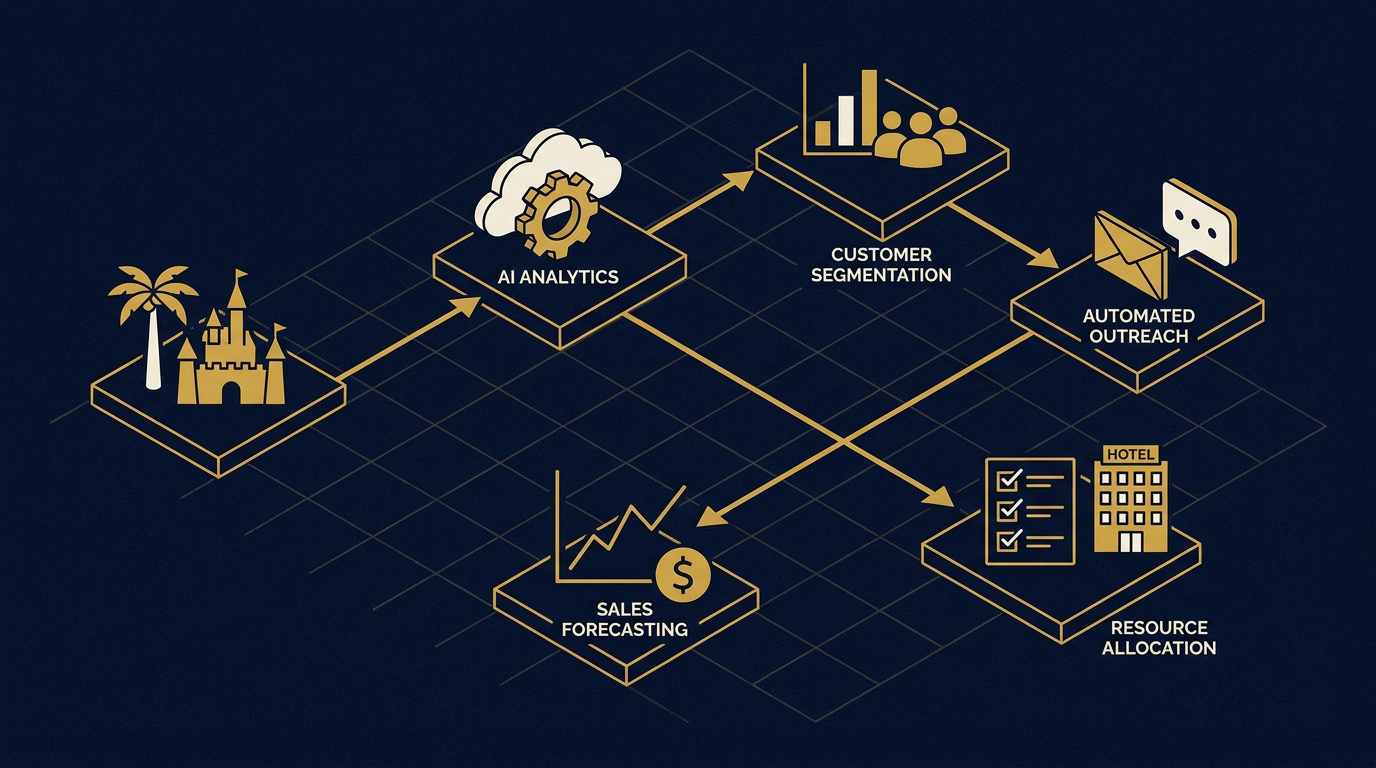
To deploy automation successfully without eroding buyer confidence, focus technology exclusively on internal speed and administrative precision. Keep human sales representatives positioned at every customer-facing touchpoint and critical decision milestone.
Executing this strategy requires a structured internal workflow for all incoming buyer inquiries:
- Deploy automated lead routing immediately upon inquiry submission. Ensure your system extracts web form data, categorizes the prospect by industry sector, and routes the lead directly to the designated territory manager.
- Use background automation tools to draft preliminary technical summaries, pull historical account records, and check inventory or service availability within sixty seconds of initial contact
- Require the human account manager to review the drafted technical details, customize the communication, and send the final response directly
- Schedule automated internal reminders for follow-up milestones while keeping all outgoing messaging entirely rep-authored and tailored to the buyer's operational reality
By using technology to handle data assembly, your sales organization eliminates administrative delays. The primary reason revenue is lost in expanding regional markets is silence. When a prospect submits an inquiry to three competing vendors, the organization that delivers an accurate, rep-verified technical response first secures the conversation. Faster follow-up ensures fewer leads are lost to silence.
What This Changes for Orlando Sales Operators
For a sales leader operating in Central Florida, incorporating artificial intelligence is not about reducing headcount or faking customer relationships. It is about building an operational engine that allows your sales team to sell more by eliminating response friction and administrative bottlenecks. Florida offers no state personal income tax and a competitive corporate tax environment, driving steady business investment into the region. To capture demand in this fast-moving commercial environment, local operators must execute with operational discipline and speed.
Implementing this approach requires three immediate operational changes:
First, audit your existing sales outbound workflows. Immediately terminate all automated outreach sequences that attempt to simulate personal rapport or fake executive connections. Replace them with targeted, rep-authored communication grounded in industry realities.
Second, retool your software stack to automate pre-call research, account data staging, and quote formatting. Let background tools assemble compliance documentation and verify regional economic partnerships, freeing your account reps to handle complex technical negotiations.
Third, establish clear disclosure guidelines for your team. Train reps to openly explain how internal automation enables faster proposal turnarounds, superior cost-efficiency, and highly responsive local support.
By shifting artificial intelligence entirely behind the scenes, you protect the buyer trust required by Central Florida business networks while giving your sales team the structural advantage required to sell more across the region.