

 Indianapolis, IN · AI
Why is AI adoption different in Indianapolis, Indiana?
Artificial intelligence adoption in Indianapolis, Indiana differs because local enterprise buyers demand operational accuracy. Automated outreach alienates clients, while internal AI engines reclaim critical selling hours.
The Regulatory and Operational Realities of the Indianapolis Market
Artificial intelligence adoption in Indianapolis, Indiana differs because the regional economy is anchored by heavily regulated, operationally complex sectors. Local commercial teams do not sell exclusively to lightweight software startups. Instead, revenue organizations interact with enterprise institutions in life sciences and pharmaceuticals, logistics and supply chain management, healthcare, information technology and software, motorsports and automotive technology, and sports management and hospitality.
Top regional employers such as Eli Lilly and Company, Indiana University Health, Elevance Health, Salesforce, Roche Diagnostics, and FedEx Express operate under strict regulatory standards, complex vendor compliance frameworks, and multi-layered procurement structures. In this environment, generic AI tools used for customer-facing communication fail quickly.
When sales teams use generative AI to automate cold email outreach, draft unverified proposals, or power front-line sales chats, they introduce operational risk. Decision-makers in life sciences and diagnostics evaluate vendors on technical precision, regulatory compliance, and verified performance. A poorly constructed AI message containing inaccurate industry terminology or hallucinated statistics damages credibility immediately.
Furthermore, the central geographical location of Indianapolis has expanded its role as a regional distribution and warehousing hub. Logistics and supply chain management operators rely on tight operational timelines and thin margins. Buyers in warehousing and freight routing inspect vendor proposals for precise technical specs, clear execution capability, and dependable service level agreements. They reject automated sales messages that offer vague promises and generic value propositions.
Where Generative AI Fails in Local Customer Interactions
Using artificial intelligence to replace human touch points in the sales cycle costs local teams valuable accounts. The local business climate benefits from a low cost of doing business, competitive state tax policies, and streamlined regulations, which has encouraged both traditional industrial firms and information technology companies to expand. However, business relationships across these sectors still depend on personal trust and technical expertise.
In sectors like motorsports and automotive technology, vendors must demonstrate deep domain knowledge and specialized engineering understanding. Sending AI-generated pitch decks or automated follow-up cadences to technical buyers signals a lack of capability. The buyer recognizes templated, synthesized language immediately and disengages.
The same dynamic applies when selling to major healthcare networks and insurance entities like Indiana University Health and Elevance Health. Enterprise healthcare sales require deep alignment across clinical, administrative, and legal stakeholders. AI tools cannot navigate internal organizational politics, assess stakeholder risk tolerance, or conduct nuanced executive discovery.
When commercial teams push AI to the front lines of customer acquisition, three distinct breakdowns occur:
- Automated email tools send generic messaging to high-value executive targets, destroying warm entry points
- Generative text tools introduce factual errors into technical product specifications, legal terms, or pricing structures
- Conversational bots handle complex buyer questions with superficial answers, frustrating procurement managers and steering committee members
Front-line customer outreach is the wrong application for generative AI in Central Indiana. Relying on AI to execute buyer conversations burns qualified pipeline and damages market reputation.
Deploying AI as an Internal Sales Acceleration Engine
While customer-facing AI automation creates friction, internal AI deployment delivers measurable efficiency. Successful revenue organizations in Indianapolis treat artificial intelligence as a back-office intelligence engine.
Commercial teams in logistics, enterprise software, and diagnostics handle large volumes of technical documentation, RFP requests, and complex deal architectures. Account executives often spend significant portions of their workweek reading regulatory updates, parsing buyer specifications, summarizing procurement documents, and customizing proposals.
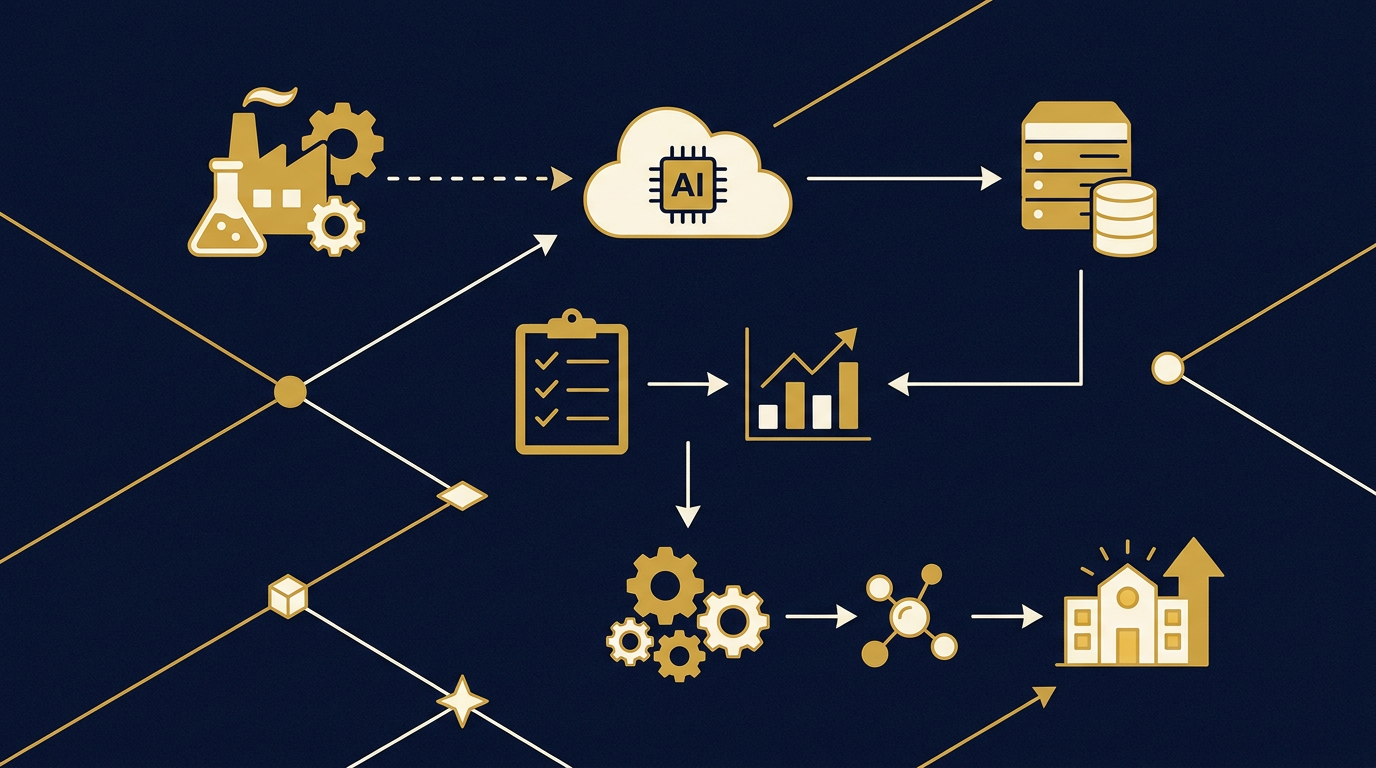
When deployed internally, artificial intelligence takes over these administrative loads. Reps use AI to analyze historical RFP responses, extract key operational requirements from complex bid packages, and summarize enterprise buyer histories before strategy calls.
This shift changes the daily workflow of the sales force. By assigning background research, account dossier creation, and document synthesis to internal AI workflows, companies reclaim valuable selling hours per rep each week. Reps transfer that saved time directly into active customer interactions, executive meetings, and strategic account mapping.
For example, when preparing a proposal for a major enterprise like FedEx Express or Salesforce, an account executive can use internal AI engines to cross-reference past contract terms, identify potential implementation bottlenecks, and outline draft responses to technical security questionnaires. The rep retains full ownership of the final output, verifying every fact and refining every argument before the document reaches the customer.
Strategic AI Integration for Indianapolis Commercial Teams
To capture the benefits of AI without exposing the business to reputational damage, revenue leaders in Indianapolis must establish clear operational boundaries. Implementing AI requires structured workflows that enforce human oversight at every client touchpoint.
First, audit your sales team's current administrative load. Identify the repetitive, back-office tasks that drain time from account executives, such as logging call notes, researching prospect backgrounds, drafting preliminary proposal outlines, and compiling market research.
Second, restrict AI software from sending unreviewed communications to prospective or existing clients. Every external email, proposal, contract term, and pitch deck must pass through human review and verification.
Third, build structured prompt libraries tuned to your target verticals. If your team sells services into life sciences firms or logistics providers, create internal prompts that instruct AI tools to organize data around industry-specific priorities like regulatory compliance, supply chain continuity, and operating costs.
To execute this transition effectively, follow these implementation steps:
- Map the specific administrative tasks in your sales cycle that consume manual labor without adding direct client contact
- Deploy internal AI tools exclusively for lead research, bid analysis, document summarization, and initial drafting
- Require mandatory manual review for every prospect-facing deliverable to verify compliance, technical accuracy, and tone
- Measure the selling hours reclaimed per rep each week and reallocate that capacity toward face-to-face discovery and account expansion
Reclaiming Selling Hours in the Indianapolis Commercial Ecosystem
Succeeding in Indianapolis requires recognizing that artificial intelligence is an internal multiplier, not a client-facing representative. The goal of integrating AI into your commercial organization is straightforward: reclaim lost selling hours per rep each week so your team can build stronger enterprise relationships and sell more effectively across Central Indiana.
When your sales reps no longer spend hours drafting initial RFP responses, searching internal drives for case studies, or compiling background data on target accounts, their capacity shifts immediately. They use those reclaimed hours to hold deeper discovery calls, meet in person with key stakeholders, and navigate complex purchasing committees at firms across life sciences, logistics, enterprise software, and healthcare.
To capture this operational advantage in Indianapolis, take three immediate steps:
First, audit your existing sales tech stack and turn off any automated software features that send unverified, AI-generated emails directly to prospects.
Second, equip your account team with internal AI workflows specifically designed to automate RFP data extraction, account background research, and pre-call dossier preparation.
Third, establish a strict human-in-the-loop review policy that mandates every proposal, email, and technical document undergo human verification before reaching a buyer.
By grounding your AI strategy in back-office efficiency rather than front-line automation, you protect buyer trust, raise rep productivity, and position your commercial team to sell more consistently across the region.