

 Austin, TX · AI
How do buyers in Austin, Texas react to AI in sales?
Buyers in Austin, Texas accept AI when it accelerates technical trials and spec analysis, but reject automated outbound that fakes personal relationships
Buyers in Austin, Texas react to AI based on operational utility and transparency. In a high-velocity, venture-influenced market, local buyers face a constant volume of outbound sales attempts. Rising operating costs driven by sharp in-migration mean companies must protect their teams' time and focus. Austin buyers are technical, self-educating, and comparison-driven. They do not accept sales reps who use AI to generate low-effort pitch emails or fake personal connections. However, when sellers use AI behind the scenes to speed up technical trials, surface benchmark metrics, or process detailed specs, local buyers accept the technology willingly.
Where Automation Earns Acceptance in Technical Evaluations
Commercial buyers across software and SaaS, semiconductors and hardware, clean energy, life sciences, higher education, and the creative and music industries evaluate vendors through direct performance testing. They do not want sales representatives to walk them through pitch slides or explain basic features. They expect product-led proof before committing to a formal sales conversation.
AI delivers immediate value when it accelerates technical setup and data access. In software, clean energy, and life sciences, buyers often require custom trial sandboxes or specific integration mappings before signing an agreement. Sellers who use AI to rapidly generate customized sandbox environments, parse technical documentation, or format compliance data compress the evaluation window.
When automation accelerates time-to-value, Austin buyers view it as competent execution. They appreciate tools that strip friction out of technical diligence. If an AI tool helps an account executive parse complex spec sheets for a hardware or semiconductor buyer in minutes rather than days, the buyer respects the efficiency. The key distinction is that the AI operates as an engineering engine, not a communication mask.
Why Automated Outbound Destroys Vendor Credibility
Because Austin sits at the center of high-velocity, venture-backed tech growth, local decision-makers receive endless automated cold outreach. Buyers develop instant fatigue toward generic cold emails, automated LinkedIn sequences, and synthetic personalization.
Sellers often use AI to scrape public profile details and insert forced pleasantries into cold messages. In this market, that approach fails completely. Technical buyers spot synthetic messages within seconds. A rep who uses AI to draft a generic, automated email signals that they have not studied the prospect's business model or technical architecture.
Austin buyers evaluate tools in public channels, consult peer networks, and ask for live trials. They discount any sales claim that is not backed by verifiable data or a direct peer reference. When an automated email makes sweeping promises about efficiency or cost savings without providing clear metrics, local prospects ignore it. Cheap outreach burns domain reputation and closes doors before a rep can start a conversation.
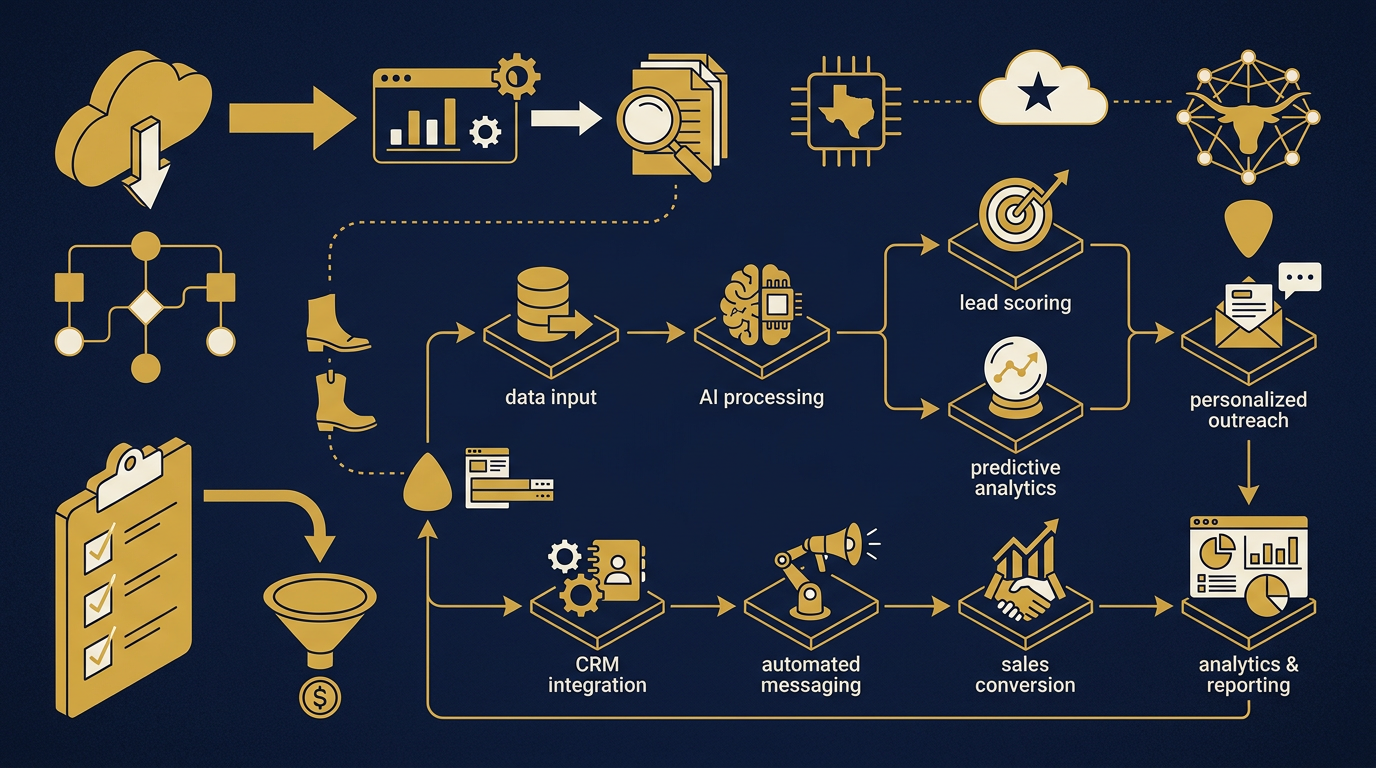
Disclosing AI Usage to Maintain Trust
Disclosing how your team uses AI is essential for preserving trust during technical negotiations. Buyers in life sciences, software, and higher education care deeply about data security, intellectual property rights, and information governance. If a prospect suspects that a vendor is feeding their proprietary workflow data into an undisclosed AI model, the deal will stop immediately.
Sellers must be completely transparent about where automation enters the pipeline. If you use AI to analyze account data, build custom models, or process trial metrics, tell the buyer upfront. Frame the disclosure around buyer speed and security:
"We use narrow AI models to parse your technical specifications and configure your trial sandbox environment. Your data remains isolated within our encrypted infrastructure, and it is never used to train public models."
This approach answers the buyer's security concerns while highlighting the operational benefit. Technical buyers do not object to modern tooling. They object to hidden data practices, unverified claims, and lazy communication.
Workflow Adjustments for Sales Operations
To win deals in Austin, local sales organizations must reframe their automation strategies around technical proof and peer validation. Move AI away from generic top-of-funnel outreach and apply it directly to workflow execution.
Start by removing automated outbound sequences that rely on synthetic personal details. Replace generic claims with precise benchmark data and accessible peer references. Use AI tools to monitor buyer interactions inside product trials, flag implementation roadblocks, and alert reps when a buyer hits a technical milestone. Ensure that every outbound message contains verifiable facts, clear data points, or direct access to a trial environment.
When presenting solutions to local buyers, show your work directly. If an AI system generated a customized cost-benefit analysis or technical architecture draft for the buyer, explain the inputs, parameters, and outputs clearly. Austin buyers respect rigorous engineering and transparent systems. They reject black-box claims and synthetic selling tactics.
Actionable Protocol for Local Sales Teams
Follow these concrete steps to align your sales engine with the expectations of local buyers:
- Audit all cold outreach and eliminate AI-generated messages that fake personal familiarity
- Shift AI deployment from prospecting to technical enablement, sandbox setup, and trial analytics
- Include product-led proof, data benchmarks, and peer references in every sales conversation
- Document your data privacy policies regarding AI and disclose automated processes during technical reviews
- Test all AI-generated technical documentation against engineer feedback before sending it to prospects
Deploying automation to enhance speed and technical precision builds trust. Relying on automation to replace honest research and technical proof loses deals immediately.