

The KPI Playbook: How to Measure What Matters & Sell More
Your dashboard is green. Every target is hit. Your team is crushing it.
But your revenue is flat. Your best people quit.
This is the paradox that most companies face. And it's not an execution problem. It's a measurement problem.
Studies show that 60% of companies hit their metrics but miss their business goals. They're measure the wrong things, you don't just miss targets. You create a culture where people game the system. Customers get angry. Your best people leave.
This is exactly what Ben McGary and George Mayfield address in The KPI Playbook masterclass. They show you how to measure what actually matters.
Goodhart's Law: Why Your Metrics Are Killing Your Results
There's an economic principle that explains why this happens. It's called Goodhart's Law, and it states something simple but devastating: when a measure becomes a target, it ceases to be a good measure.
The moment you tell your team to hit a specific number, they stop working toward the actual outcome. They start working toward that number. They optimize for the metric, not the result.
Take a call center. Management wants to increase efficiency, so they set a KPI: keep average call time under five minutes. What happens? Agents hang up on customers. They transfer calls unnecessarily. They don't solve the problem. They just get off the phone as quickly as possible.
The metric was designed to measure efficiency. People figured out the most efficient way to hit the metric. They hit the number. They destroyed the customer experience.
This isn't malicious. We all want things to be a little easier and more convenient. If you set a goal, your team will find the fastest, laziest way to achieve it. You have to plan for that byproduct before you implement the KPI.
The Compass vs. The Speedometer: Understanding Your Framework
Most companies confuse their frameworks. They throw around terms like OKRs, KPIs, Rocks, and SMART goals without understanding how they work together.
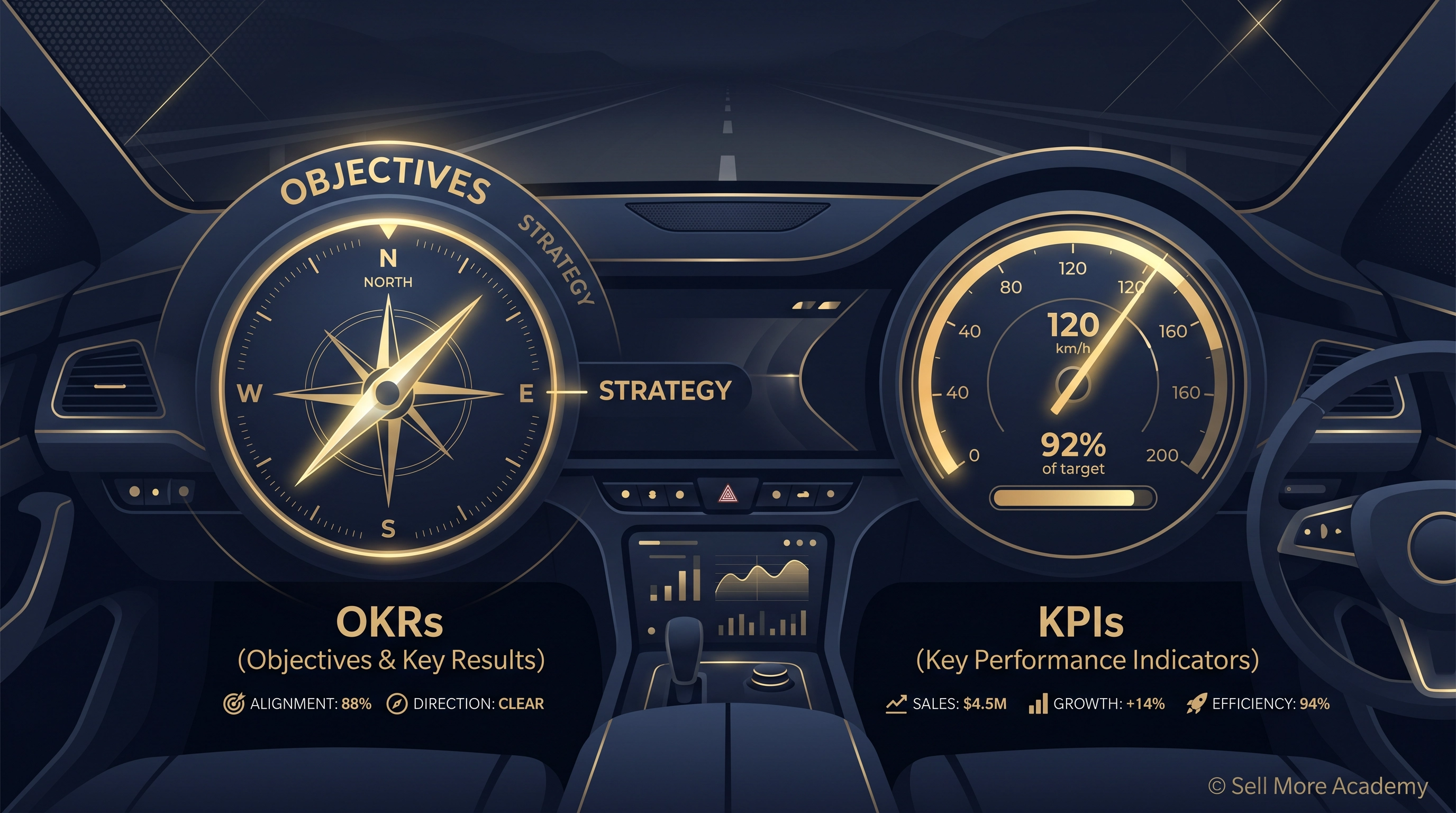
Here's the truth: you need both a compass and a speedometer. You can't navigate by only looking at speed, and you can't drive by only looking at direction.
OKRs (Objectives and Key Results) are your compass. They tell you where you're going. Where do you want the company to be in three to five years? That's your North Star. Everything else points toward it.
KPIs (Key Performance Indicators) are your speedometer. They tell you how fast you're going right now. Are you on track to reach your destination? Are you moving at the right pace?
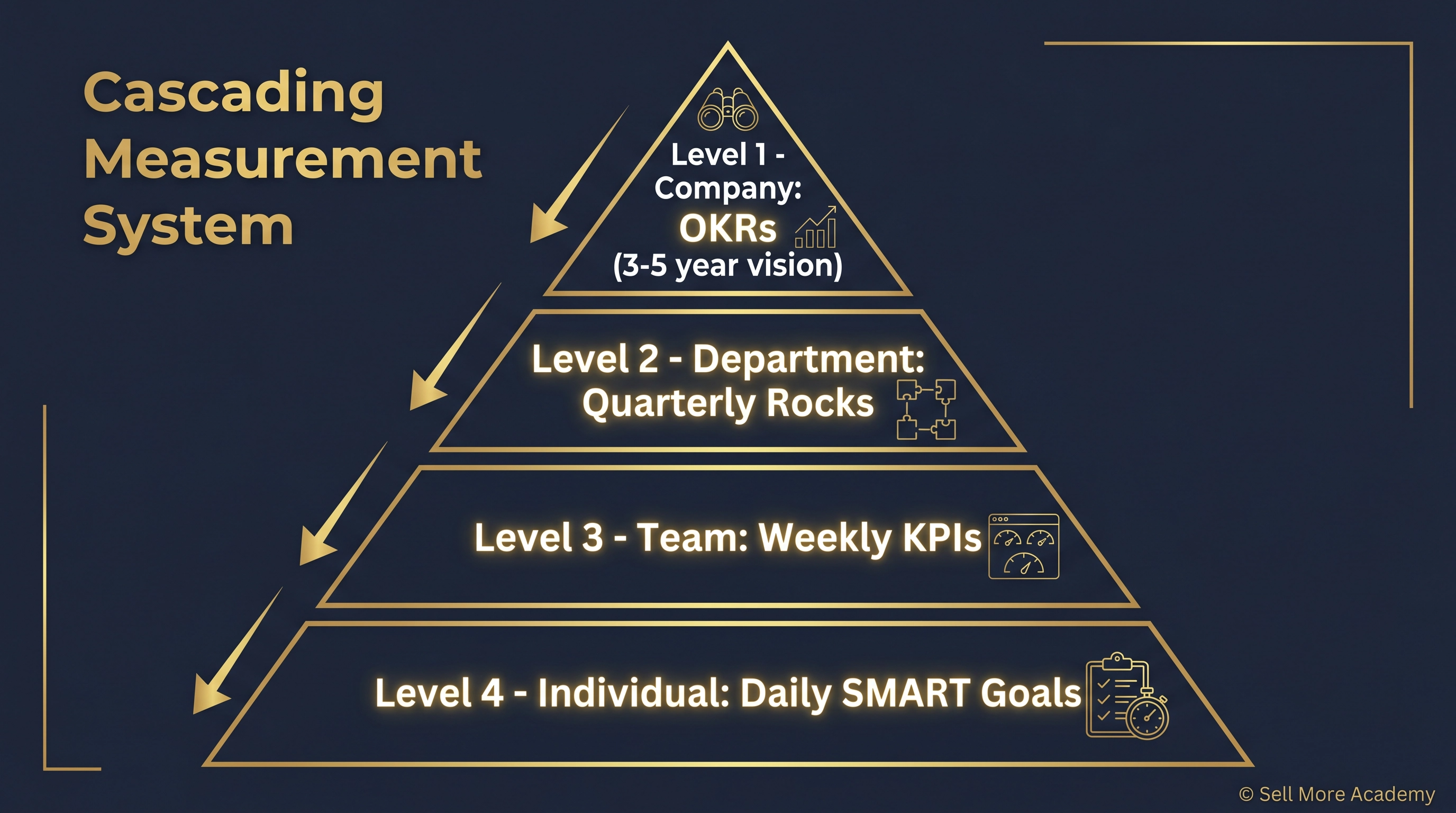
Rocks are your quarterly or annual milestones. The big chunks of work you need to complete to move from where you are to where you want to be.
SMART Goals are your daily and weekly execution. Specific, measurable, attainable, realistic, timely actions that drive the KPIs.
If you only focus on speed (KPIs), you might be moving fast in the wrong direction. If you only focus on direction (OKRs), you have no idea if you're actually making progress. You need both.
The Ratio Rule: Balance Speed with Quality
One of the most powerful insights from the masterclass is this: stop using flat numbers for your KPIs. Use ratios instead.
If you tell a machinist to produce 50 parts a day, they might rush and produce 50 parts that fail quality assurance. They hit the number. The work is useless.
Instead, measure the percentage of parts produced that pass QA. This builds quality control directly into the metric. It forces the team to balance speed with quality automatically.
If you have a speed metric, you must have a quality metric to balance it. This is non-negotiable. Otherwise, you're just incentivizing people to game the system.
Build Your Measurement System: The Three Rules
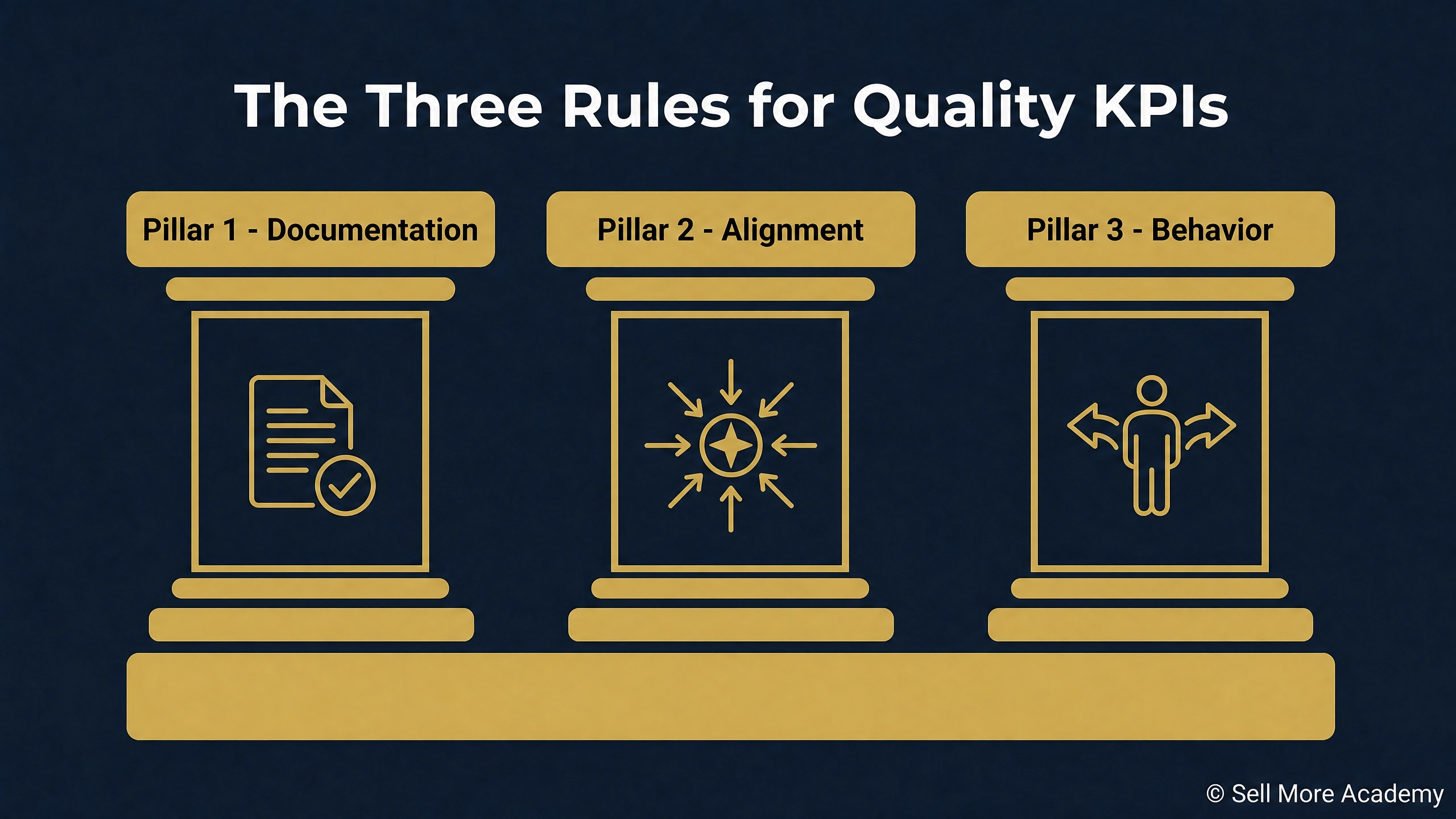
A strong measurement system requires three things:
First, documentation. Write down your OKRs and KPIs. Make them real. Make them accountable. Don't keep them in your head. Your employees need to know what you're measuring and why.
Second, alignment. Every KPI must point toward your OKRs. If your KPIs don't align with your strategy, you're driving fast in the wrong direction. Every level of your organization should cascade down from the company OKRs.
Third, behavior. Ask yourself: are we incentivizing gaming the system, or are we incentivizing the behavior we actually want? If you set a metric, what's the fastest, laziest way someone could achieve it? Plan for that byproduct.
The Operating Rhythm: Weekly, Monthly, Quarterly
You can't set these metrics and forget about them. You need a rhythm.
Weekly: Track the inputs. Are you doing the right activities? This is where you catch problems early.
Monthly: Review the outputs. Did those activities produce results? Are you getting the outcomes you expected?
Quarterly: Adjust the strategy. Do you need to pivot? Do your OKRs still make sense? Is the market changing?
This requires a commitment to working on your business, not just in it. Make this your most important meeting of the week. Everything else flows from this.
The Bottom Line
Your systems should serve you. If your KPIs are causing your team to make bad decisions, you need to change your KPIs. Stop measuring what's easy. Start measuring what matters.
The full masterclass goes deep into how to implement this at every level of your organization, how to avoid the profit trap that destroys culture, and how to give your team authorship over their goals so they actually care about hitting them.
Join Sell More Academy to access the complete KPI Playbook Masterclass and build a measurement system that actually works.



Facebook
Instagram
LinkedIn
X
Youtube
TikTok
Pinterest