How to Sell More: Trust Kills Sales
For decades, the golden rule of sales has been drilled into our heads: "People buy from people they know, like, and trust." It's the foundation of almost every sales training program on the market. We're taught to build rapport, find common ground, and establish a friendly connection before ever making a pitch.
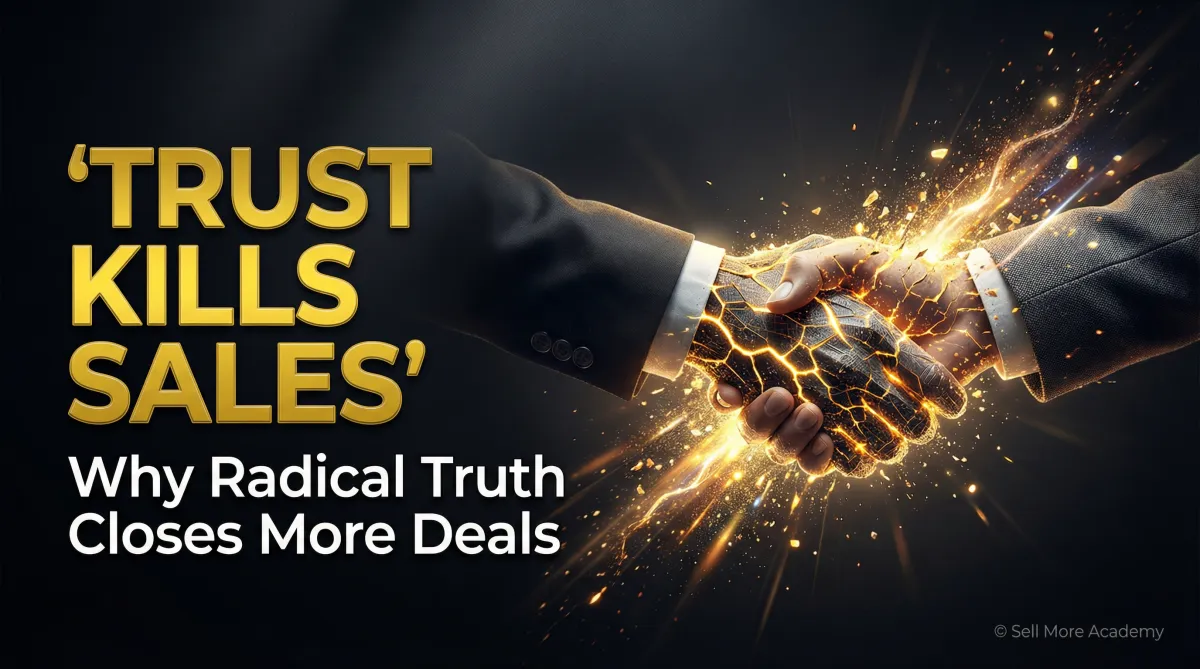
But what if everything we've been taught about trust in sales is completely wrong?
What if the pursuit of trust is actually the very thing killing your deals?
The Trust Trap: Why Likability is a Liability
Let's look at the actual definition of trust. It's a firm belief rooted in faith, confidence, and assurance. Notice what's missing from that definition? Evidence. Proof. Facts.
Trust is an emotional state, not an objective reality. And when we rely on belief rather than knowledge in a sales environment, we set the stage for manipulation.
When we talk about "trust" in sales, what we usually mean is likability. We want the prospect to like us enough to buy. But likability is a fragile emotion. Your buyers don't need a new friend; they need a solution to their problem and an expert guide to get them there.
If you're prioritizing likability over expertise, you are actively undermining your own authority. You're shifting the conversation from "let me show you the evidence" to "just trust me." And in today's market, buyers are far too skeptical for "just trust me" to work.
The Data Doesn't Lie
If you think trust-based selling is still the way to go, consider these numbers:
According to Harvard Business Review, only 18% of salespeople are actually trusted by buyers during the sales process. That's less than one in five.
In a study of elite sellers, 89% stated they do not need to be liked to close deals.
Conversely, 86% of the lowest-performing salespeople believe that being liked is essential to their success.
The best salespeople in the world aren't trying to be your friend. They're trying to be the undisputed authority who can solve your problem.
The Alternative: Radical Truth and Transparency
So, if traditional trust-building is a trap, what's the alternative?
The answer is radical truth and transparency.
This isn't about being blunt or rude. It's about being unequivocally honest about your product's strengths, its limitations, who it's for, and who it's definitely not for. It's about being transparent about your pricing and your motives.
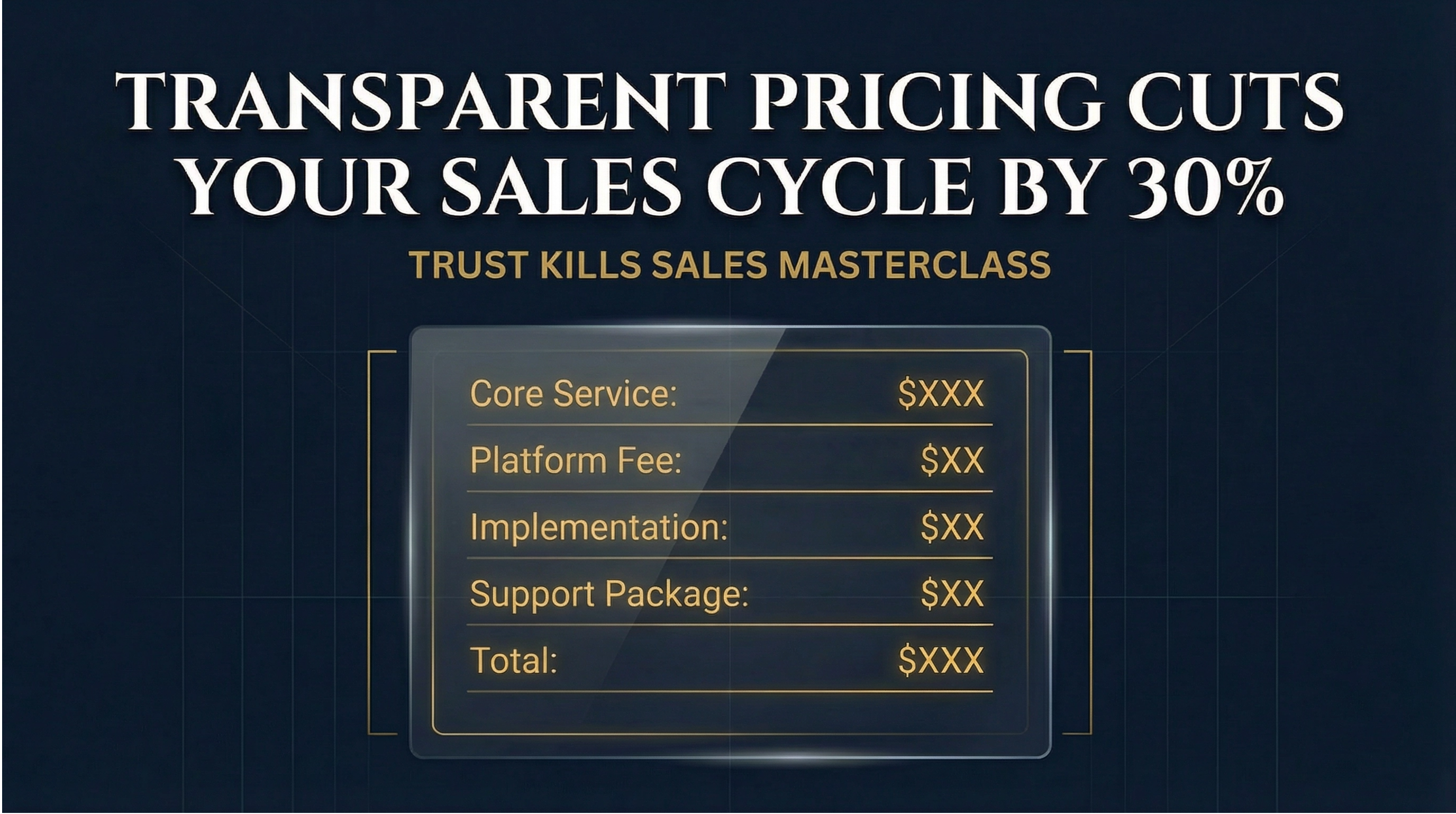
When you break down your pricing and show exactly what you're charging for, you eliminate doubt. A Forrester study found that transparent pricing can reduce the sales cycle by up to 30%. Why? Because the buyer isn't wondering if they're being overcharged or hiding hidden fees. The friction is gone.
Shift from Persuasion to Proof
Today's buyers spend 94% of their purchase cycle doing their own research, checking review sites, and talking to peers. They spend a tiny 17% of their time actually talking to suppliers.
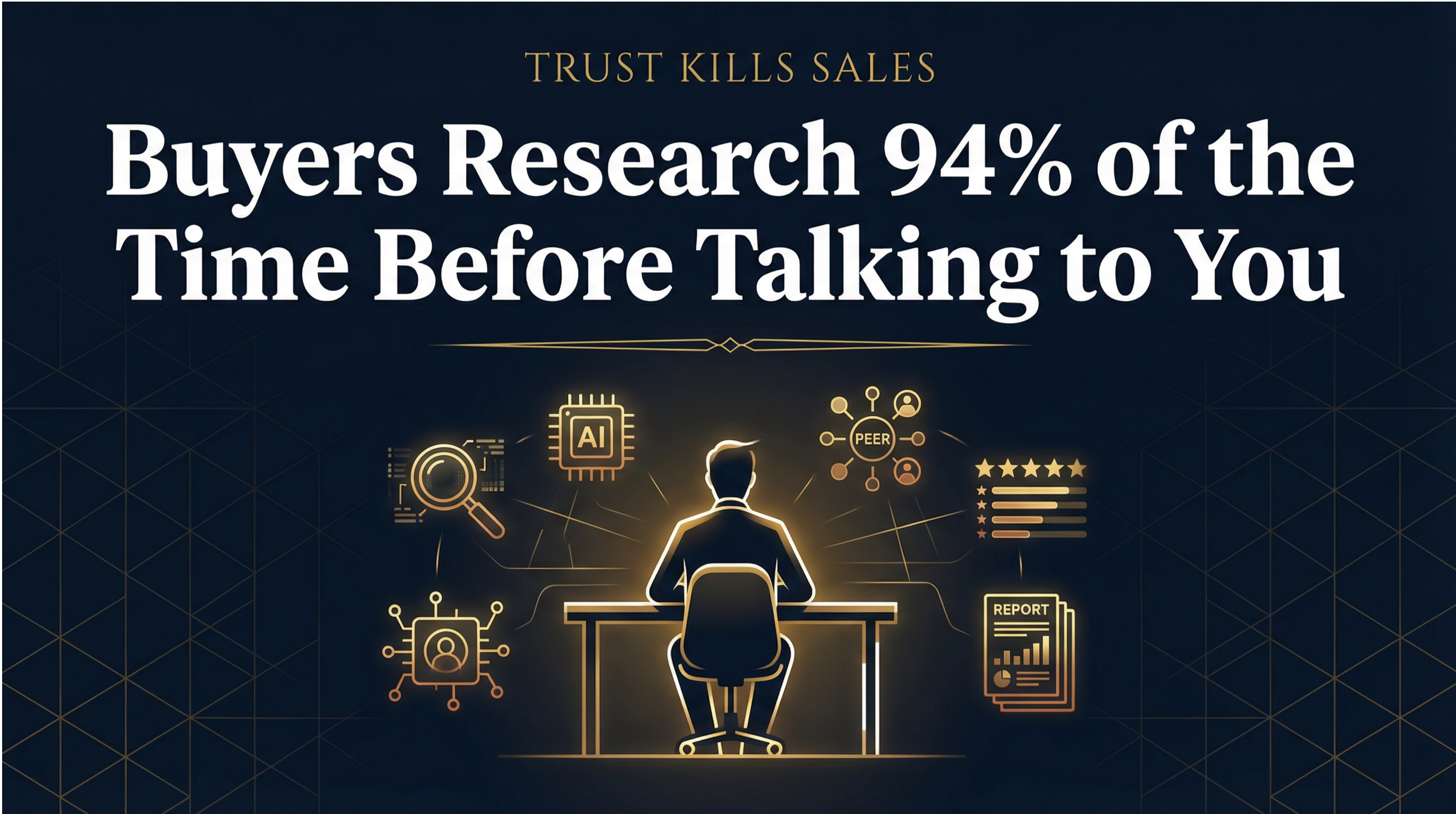
They are actively rejecting vendor messaging until it's backed by hard evidence.
Your role is no longer to persuade. Your role is to provide proof. Stop trying to back prospects into a corner with clever leading questions. Start dealing in evidence, knowledge, and experience. Show them the data. Provide third-party validation.
When you shift from trying to get people to believe you to simply showing them the truth, everything changes. You stop being a salesperson trying to win a battle of wills, and you become a trusted advisor guiding them to the right decision.
Stop chasing fleeting moments of trust. Start building unshakable authority through radical truth.
Want to dive deeper into this framework and learn exactly how to implement radical transparency in your sales process?
Join us inside Sell More Academy to watch the full 45-minute "Trust Kills Sales" masterclass and access our complete library of resources designed to help you sell A LOT more 'stuff'.


Facebook
Instagram
LinkedIn
X
Youtube
TikTok
Pinterest