How to Sell More: Narrative & Nostalgia
Every brand is fighting for attention. We all know that.
But attention alone isn't enough to build a lasting business. We need connection. We need to embed our brand into the hearts and minds of our audience.
When we talk about nostalgia and tradition in branding, we are not talking about cheap gimmicks. We are talking about finding a way to connect that goes far beyond just throwing vintage fonts at your logo and calling it a day. We are talking about something much deeper.
We want to tap into familiar feelings, shared histories, and foundational truths that your audience already knows and believes in. Then, we want to weave that into our brand story in a way that feels natural and genuine.
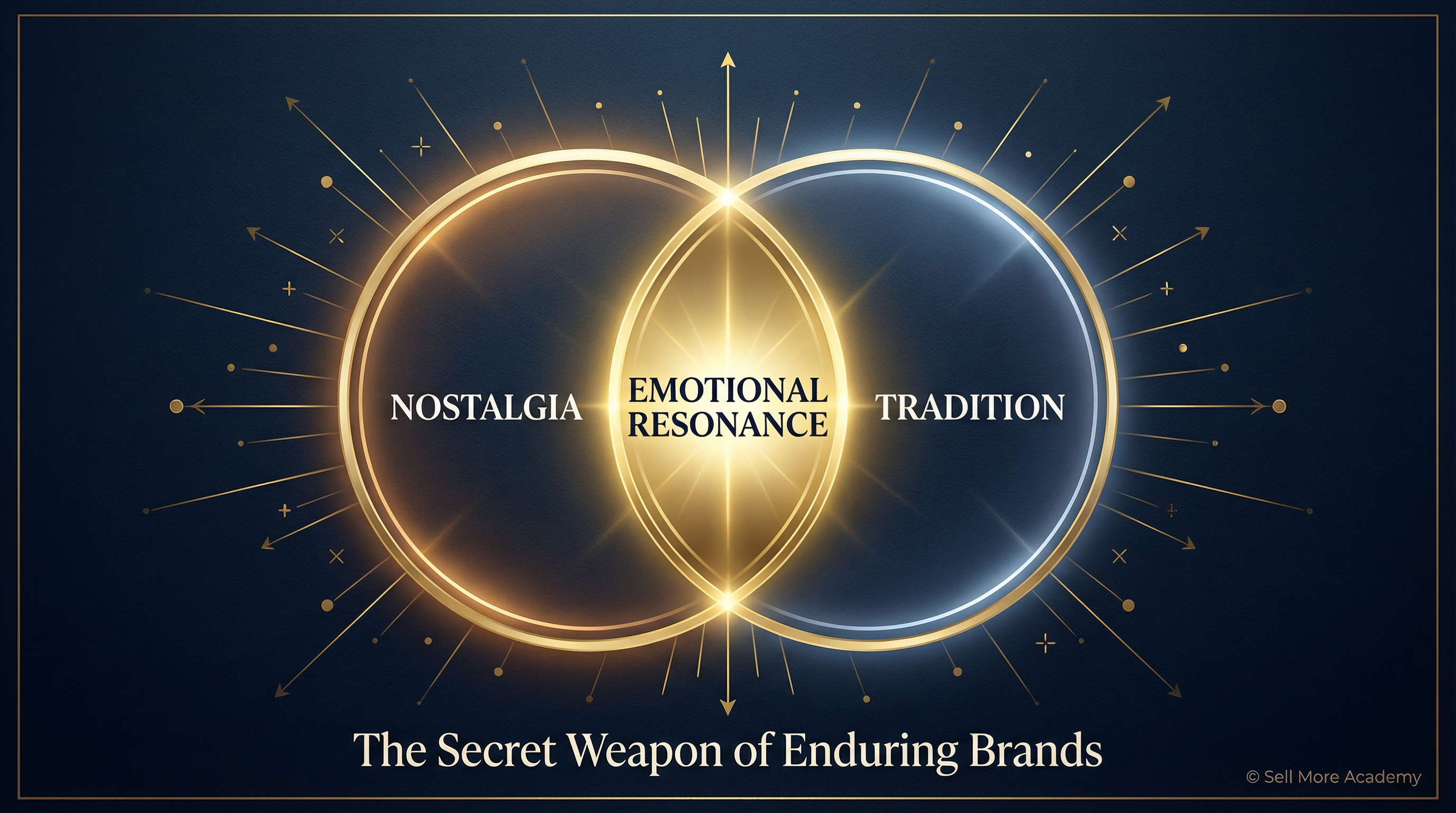
The goal here is to create emotional resonance. The kind that builds unwavering brand loyalty. The kind that makes people choose you over your competitors. Not because you are cheaper or flashier, but because you feel like home to them.
The Power of Emotional Resonance
Our brains are wired for story and emotion. It is the oldest technology we have.
When a brand taps into a collective memory or a respected tradition, it is not just selling a product. It is selling a feeling, a piece of identity, a link to something bigger than themselves.
Logic informs our decisions. But emotion is what drives them.
When you engage someone emotionally, you bypass rational resistance. You create instant rapport.
Nostalgia triggers positive memories. It creates warmth and familiarity. It makes people feel safe. And when people feel safe, they are much more likely to buy.
Tradition signals authenticity, heritage, and enduring value. It says, we have been here, we have proven ourselves, and we are not going anywhere.
That mixture of nostalgia and tradition is so powerful that it can bypass resistance and forge an instant connection.
The Tightrope of Balance
This is the tightrope we all walk when building our brands. Balance is everything.
You cannot ignore where you came from, but you cannot be stuck there either.
We see brands that are so focused on their heritage that they become irrelevant. They look dated. They feel stuck in the past, unwilling to adapt. Oftentimes, younger audiences simply cannot connect with them.
On the flip side, we see brands that abandon their heritage completely. They chase every trend. They rebrand constantly, and they end up looking hollow. They don't stand for anything.
The brands that win are the ones that can honor their heritage while speaking to today's audience. They find the timeless truths in the past and express them in modern ways.
That is balance. That is what we are working on.
The Cost of Getting It Wrong
You cannot just slap a vintage filter on your images and call it nostalgia. Your audience is smart. They will detect any levels of inauthenticity immediately.
We are aiming for natural alignment, not a forced narrative.
Natural alignment means discovering authentic connections between your brand's core and a shared heritage. It should feel effortless and true. When you see it, you know it. It just makes sense.
Forced narratives mean superimposing historical elements without any genuine purpose. It feels opportunistic. It feels fake. It is like somebody wearing a costume, but they are not really that character.
When we get this wrong, we lose our audience. Consumers can detect insincerity. If it feels fake, people will tune out. It tells your audience that you do not know who you are, or worse, that you are trying to manipulate them.
This leads to brand confusion and the erosion of trust. If there is a mismatch between your message and the reality, people will not buy.
The Search, Match, Write Framework
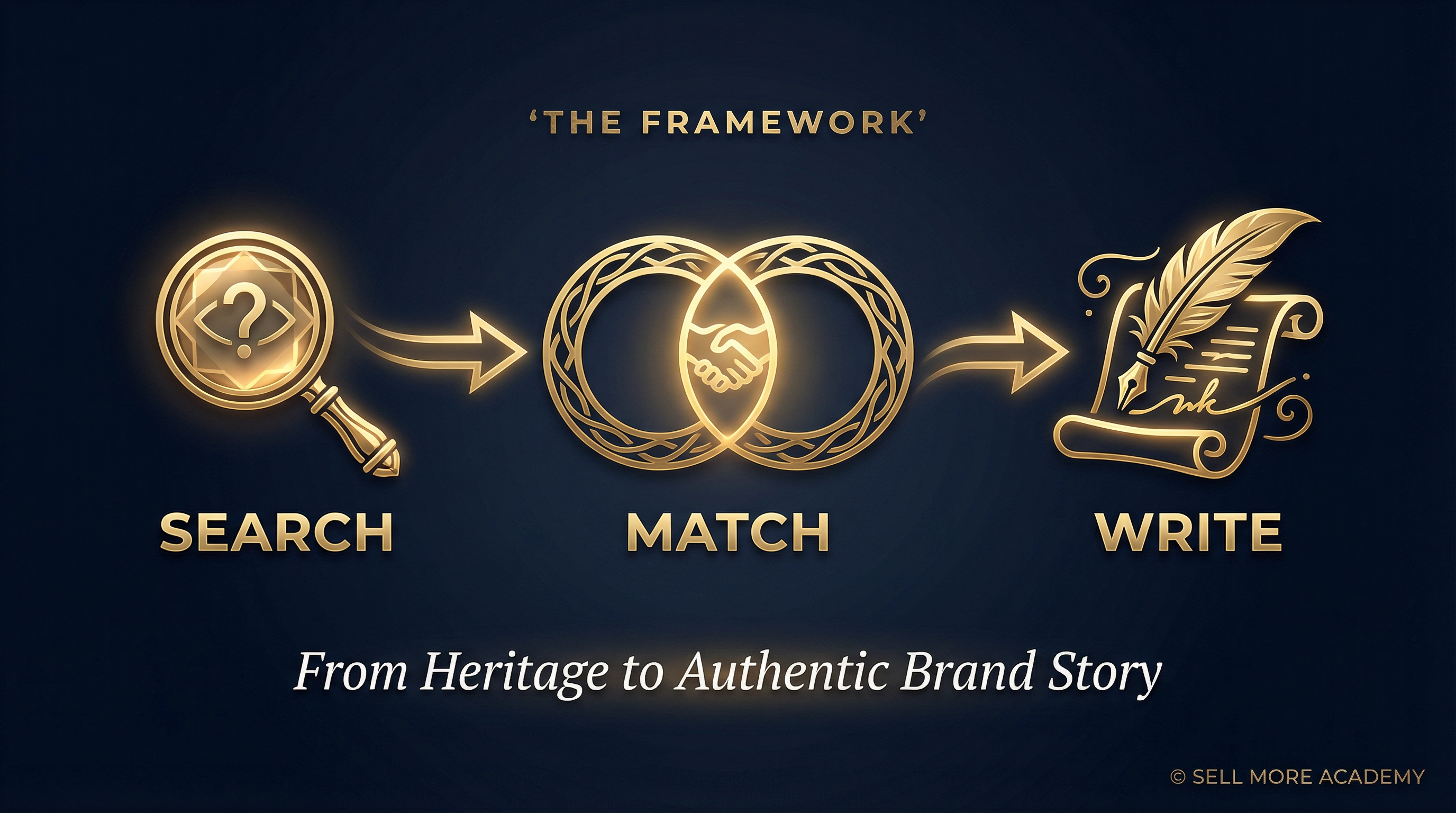
To ensure we get this right, we use a simple framework: Search, Match, and Write.
First, we search. We dig into our brand history, industry heritage, cultural touchstones, and customer memories. We build a treasure chest of authentic material. This means acting like an archaeologist. Look for the original problem your founder solved. Talk to your long-term employees and your best customers to uncover the true stories that shaped your brand.
Next, we match. We find the perfect overlap between heritage and our modern identity. We ask what from the past still rings true today. We identify the timeless truths that illuminate our message. This is about finding the natural intersection, not forcing a connection where one doesn't exist. If a historical element is just decoration and doesn't actually illuminate who you are, it's forced.
Finally, we write. We craft our narrative. We transform our discoveries into compelling stories. We focus on emotion, using language that conjures warmth and authenticity. We show, we don't just tell. This means giving your audience the canvas and the paint, and letting them paint the picture themselves.
Heritage Done Right
When you look at brands that successfully navigate this, you see a clear pattern.
Take Levi Strauss. Their connection to tradition is inherent, not manufactured. They didn't just slap a vintage label on a new pair of jeans. They leaned into the timeless truths of durability, rugged individualism, and quality craftsmanship—values from 1873 that are still completely relevant today. Their narrative feels effortless because it is true.
Or consider Barbie. Mattel didn't just remake a doll; they honored what made her iconic while engaging with today's cultural conversations. They found the overlap between the nostalgia of adults who grew up with the brand and the modern themes of empowerment. They balanced their heritage with contemporary relevance.
Avoiding the Red Flags
As you build your narrative, you have to watch out for the red flags of a forced narrative.
Are you jumping on a trend just because another brand succeeded with it? Are you distorting your actual brand story to fit a historical theme? Are you using historical elements purely as decoration?
If the answer to any of these is yes, stop. Go back to the search phase.
Take Action: Audit Your Brand Story
The first thing you need to do is audit your current brand story. Go through your website, your social media, your sales pitches. What stories are you already telling? Are they authentic?
Ask yourself the ultimate question: If we remove the logo, would they still know it was us?
If the answer is no, your connection to tradition might just be a font and a filter.
Start small. Pick one product or one service and run it through the Search, Match, Write framework. Test it. Refine it.
If you can build this connection and follow this framework, you will build a brand that endures. And ultimately, you will sell more.
Ready to dive deeper into this framework and see exactly how top brands apply these principles?
Watch the full masterclass replay inside the Sell More Academy.
Join Sell More Academy to access the full masterclass and start building deeper connections today.
For more insights on building a strong brand foundation, check out our previous post on The Founder's Footprint.


Facebook
Instagram
LinkedIn
X
Youtube
TikTok
Pinterest